• An Open Book: TMSW’s Library
  • Copyright
  • Food for Thought Recipes
  • My Right Eye: A Medical Memoir by Marci Rich
  • Praise and Awards
    • Writing Badges
  • The Midlife Second Wives’ Hall of Fame
  • Who is The Midlife Second Wife?
    • Contact
    • FAQ
  • Read Me On The Huffington Post

The Midlife Second Wife ™

~ The Real and True Adventures of Remarriage at Life's Midpoint

The Midlife Second Wife ™

Category Archives: Relationships and Family Life

“Only connect.” —E.M. Forester

… and the Versatile Blogger Award Goes to …

12 Thursday Jan 2012

Posted by themidlifesecondwife in Relationships and Family Life, The Healthy Life, The Writing Life, What's the Buzz?

≈ 9 Comments

Tags

Blog Awards, blogs, Cancer, Life, writing

Bloggers are certainly a supportive and encouraging group! A compatriot has bestowed another award upon The Midlife Second Wife. “The Versatile Blogger Award” comes to me from a photographer in Minnesota who blogs at From Moments to Memories. My thanks to her for not only visiting and reading TMSW, but also for giving it some lovely emerald-green bling!

There are a few bits of housekeeping that go with accepting this award. In addition to thanking my nominator and linking to her site, I’m to share with you seven things about myself that you might not otherwise know. (Are there things about me that I haven’t already told you on this blog? Yes, gentle reader. There are.)

However. I’m going to save the list of revelations for the end of this article, because by my lights, the best thing about this award is not that I get to tell you more about me (blah-blah-blah-blog), but that I get to blog it forward by giving the award to 15 of my favorites.

I ask you now to imagine me wearing an Atelier Versace gown as I approach the microphone to announce these outstanding nominees and award winners. In no particular order, they are:

Diana Patient: Photography

Savory Simple

Momo Fali

Dating Dementia

Late Bloomer Bride

Simply Solo

Stirrup Queens

Pen in Hand: Words and Drawings by Karen Sandstrom

Jane in Her Infinite Wisdom

Love, Your Copyeditor

WordCount

The Cooking Bride

ph.d. in creative writing

Sudden Flashes of Inspiration

MidLife Bloggers

Let’s give them a round of applause and a look-see!

And now, as promised, here are Seven Things You Don’t Know About TMSW
(and yes, they’re all true):

1. I was 13 years old before I learned how to ride a bike.

2. I met my first husband in divorce court.

3. I was told once that I had eye cancer.

4. Days later, I was told that I had thyroid cancer.

5. It turns out that I didn’t have eye cancer after all.

6. I did, however, indeed have thyroid cancer, but surgery and a “smart pill” laced with radioactive iodine fixed me up. (No, I don’t glow in the dark.)

7. I will write about these events, and more, in future editions of TMSW.

Let’s not end this post in a minor key. As Fran Drescher says, “Cancer Schmancer.”

I’m healthy, I’m married to the love of my life, I’ve got a wonderful son and great stepsons—they’re healthy, too—and I’m spending my days doing what I love: Writing. And cooking. And, it seems, passing around blogging awards like a kid in grade school, handing out cookies on her birthday. All in all, life is good.

I hope that life is good for you, too.

Share this:

  • Click to share on Facebook (Opens in new window) Facebook
  • Click to share on X (Opens in new window) X
  • Click to share on Pinterest (Opens in new window) Pinterest
  • Click to share on LinkedIn (Opens in new window) LinkedIn
  • Click to email a link to a friend (Opens in new window) Email
  • Click to print (Opens in new window) Print
  • Click to share on Tumblr (Opens in new window) Tumblr
  • Click to share on Pocket (Opens in new window) Pocket
  • Click to share on Reddit (Opens in new window) Reddit
Like Loading...

A New Year, A Time for New Endings

04 Wednesday Jan 2012

Posted by themidlifesecondwife in Midpoints, Relationships and Family Life, Remarriage, Transitions

≈ 2 Comments

Tags

Life, New Year, Resolutions

—MorgueFile image

One of the best quotes I’ve come across in a long time—in two diverse venues—is from the writer Maria Robinson, who said: “Nobody can go back and start a new beginning, but anyone can start today and make a new ending.”

This seems an appropriate way to start the first blog post of the new year, don’t you think?

Robinson’s quote also gave me pause. I had always thought that my remarriage represented a New Beginning, but perhaps that way of thinking has me coming down too hard on myself. At life’s midpoint, it does seem daunting, if not downright exhausting, to Start Over. Maybe it’s just useful semantics (my cockamamie tendency to be unusually susceptible to language), but when I begin to recalibrate my perspective as that of making a new ending rather than a new beginning, I do believe I can actually feel some of the pressure roll off my back.

Ah, the hopefulness of a new year.

While we’re on the subject of new endings, I want to share with you some more wonderful insights that fought their way to the surface of all the tinsel and glitter of the season. They’re from a terrific article, “30 Things to Stop Doing to Yourself,” and I want to give a shout out to the blog Marc and Angel Hack Life for being awesome. Here’s the top 10 from their list of 30. As resolutions go, these are pretty extraordinary.

  1. Stop spending time with the wrong people.
  2. Stop running from your problems.
  3. Stop lying to yourself.
  4. Stop putting your own needs on the back burner.
  5. Stop trying to be someone you’re not.
  6. Stop trying to hold onto the past.
  7. Stop being scared to make a mistake.
  8. Stop berating yourself for old mistakes.
  9. Stop trying to buy happiness.
  10. Stop exclusively looking to others for happiness.

There are 20 more of these, and many other articles on their blog that will make you stop and think. But before you go, and while I’ve got you thinking about new endings and old behaviors to stop, would you like to share one of your own resolutions in the comment section? What’s the one thing you’d like to stop doing this year? Or better yet, what’s the one ending you’d like to make new?

Happy New Year.

Share this:

  • Click to share on Facebook (Opens in new window) Facebook
  • Click to share on X (Opens in new window) X
  • Click to share on Pinterest (Opens in new window) Pinterest
  • Click to share on LinkedIn (Opens in new window) LinkedIn
  • Click to email a link to a friend (Opens in new window) Email
  • Click to print (Opens in new window) Print
  • Click to share on Tumblr (Opens in new window) Tumblr
  • Click to share on Pocket (Opens in new window) Pocket
  • Click to share on Reddit (Opens in new window) Reddit
Like Loading...

The Triumph of Love: A Talk With Author Wendy Swallow

12 Monday Dec 2011

Posted by themidlifesecondwife in Love, Monday Morning Q & A, Relationships and Family Life, Remarriage, Second Weddings

≈ 2 Comments

Tags

Life, Love, Marriage, Premarital Counseling, Relationships, Remarriage, second marriages

Several months after John and I became engaged, I was assisting a journalist at the New York Times with a story—part of my regular duties as director of communications for the music conservatory where I worked. During our e-mail exchange, I mentioned that I was getting remarried, relocating to Virginia, and would soon be leaving my job. She wrote back to wish me luck and tell me about a book that crossed her desk when she was an editor at the Times Book Review. She found it “extremely interesting and well written,” she wrote, and sent me a link that led me to Wendy Swallow’s The Triumph of Love Over Experience: A Memoir of Remarriage. Something told me to read it—most likely the voice inside my head suggesting that after a quarter century of marriage and seven post-divorce years on my own, advice from a person who had been in the trenches might be useful. Deeply in love, John and I share a common sense of how to be in the world and of the world—with the same values, faith, and politics—and we operate from the same zone of trust and honesty. We’ve always been able to communicate easily and openly about our relationship. Still, advice from an expert is always welcome, and I was curious to see how someone else navigated the waters we were about to enter. I should mention that Wendy and her second husband each had two sons when they remarried—all of them teenagers.


THE TRIUMPH OF LOVE OVER EXPERIENCE: A Memoir of Remarriage

By Wendy Swallow
296 pp. Hyperion.

Her book was a comfort to me, a survival guide, user’s manual, and road map all in one. I have recommended it countless times—and not just to second couples—anyone in a relationship will benefit from reading it. Regular followers of this blog already know that I’ve cited Wendy’s wisdom before. One of my favorite quotes appears on the “Secrets to a Happy Relationship” page, which you can find at the top of the blog. When I began formulating the editorial objectives for The Midlife Second Wife, I determined that mine would not be the only voice you would hear; a section devoted to interviews with experts was therefore essential. Wendy Swallow is the first person to whom I reached out. I’m pleased and honored that she agreed to do this interview. Here is an edited transcript of our conversation, which took place on Thursday, December 1, 2011:

Wendy, thanks so much for participating in this interview. I’ve been looking forward to our conversation for some time. So have some of my readers. One of them sent me this e-mail:

I’m not in midlife … and not a second wife, but I’m having thoughts and fears of a second marriage. I’m 43 and said that I would never remarry, but I have recently found someone who I would consider marrying and I’m scared as hell!

Based on the research you did for your memoir of remarriage—and based on your own happy experience—what do you say to people who are genuinely frightened by the prospect of “stepping off the cliff and hoping to be able to fly?”

Those fears need to be taken seriously. That doesn’t mean you give in to them, but you listen to them and examine them. You have to trust your gut on this stuff, but you also have to really believe strongly—and the research bears this out—that the people who do best in a remarriage are those who have really worked to process what happened in their first marriage and their divorce, and who have grown from those experiences. That means perhaps going into counseling, accepting your role in what did not go well in your former relationship and where those problems lay, and in your ongoing relationship with your ex—even if the person that you left seems mostly to blame for the marriage’s failure from your perspective. Everybody has to look at how they contributed to the marriage not working out—even going so far as to ask why you married that person in the first place. This is especially true if you have children. I believe strongly in this. I don’t think it’s an easy process to go through. But if you want to grow and be able to marry again, this is an important piece of the puzzle. You have to keep those lessons in front of you. Researchers find that people who do not do well in remarriage never really learned the lessons of their first failed marriage. The statistics for second marriages succeeding are not great. And for those who remarry a third time, the odds that that marriage won’t work increase, and they go up for each subsequent remarriage.

I know. The numbers are pretty grim. Your reminder that we learn the lessons from our past experiences is critically important. What other conscious decisions must a couple make, and what actions must they take, for their second marriage to have a shot at success?

One of the things Charlie and I told each other early on was this: “I just want to be clear: I’m not rescuing you.” We were mostly talking to ourselves. We married our first spouses because we wanted to help them be more stable in the world. After my marriage ended, it ultimately became more important to me that I be really stable and happy in my single, divorced life. I knew this for myself, but I wasn’t sure that Charlie saw that.

There’s a moment in the book where I write about how we went to counseling with a minister. At the very first session, she managed to surface the whole issue of money, because we had a wealth disparity in our relationship. It wasn’t a bad thing—we didn’t think that money was something we’d have to spend a lot of time worrying about. But we had slightly different attitudes to this disparity in our relationship—we had two alien cultures coming together—and we recognized that it could create challenges in the future. It took—it always takes—compromise and communication to work those things out, so having these counseling sessions helped us; even if you think you know what you’re doing, a little premarital counseling can go a long way.

I want to return to the topic of compromise, but first I have to say something about premarital counseling. In our case, that train had left the station; that’s why I was so glad to read your book. How risky is it to take on a second marriage without going through couples’ therapy first? What advice do you have for those who are leaving it to their own devices?

I do think there’s a lot of good literature out there, and many excellent books that deal with stepfamilies, so there are a lot of resources. You can get counseling in various ways. A wise, good friend can be helpful. Definitely you have to talk to each other.

Before I left my first husband, I remember talking to a friend who remarried. I asked him what worked in his second marriage that didn’t work in his first. He said that when he married his second wife, he told her, “If you have a problem with something I’m doing, tell me right away. Don’t let it snowball.” That was their mantra.

I really thought about that. If you establish that you can talk about the difficult issues together early, then that’s good.

Very early on, our kids got into this habit that we worried about at first: drinking milkshakes at 10 at night and watching South Park in the kitchen. At first Charlie and I hung around, but then we realized they had more fun without us there. So we started taking our dog out for a long walk while they had their time together. It was perfectly natural; we didn’t like South Park. We’d leave the house with the dog for those long walks, and that was when we could talk without people hearing us or wondering why we were huddled together and whispering. We were both working full-time and running all over D.C. with these kids to play practice, SAT prep—we had very little downtime with each other—so those walks were very helpful in giving us a chance to download. His boys would bring their issues to him, mine to me; kids communicate with their own parents, mostly. Sometimes there were things I needed to know, and I wanted to anticipate what level of support was required of me.

That’s a great example of using every opportunity to keep the lines of dialogue open. Let’s get back to the subject of compromise. It’s undoubtedly important, but is there such a thing as too much compromise?

I think you have to trust your gut. You might agree to compromise on something but it doesn’t sit right with you. Trusting your gut has two actions:

1. Listening to your inner feelings, and assessing those feelings. How fair are they?

2. Acknowledging that there may be something you either need to bring back or learn to deal with. Which is it?

It’s not enough to listen to your gut—you must assess your feelings. Let your rational, less emotional brain think about it. Once you’ve done that, ask yourself what you really think will be different after your compromise—what outcome are you looking for?

There’s a famous moment in our family when we all learned a lot about compromise. My youngest stepson, Sam (the second-youngest of the boys) was advocating for a cell phone; he went to a school that was farther from home than the others. We worried about the cost of four cell phones, thinking that if we got one for Sam, we’d have to get phones for all four boys, as they were close in age. It begged the question: Who is ready for something, and who isn’t?

Each boy got his own computer when they started high school; before that, they had to share. And they would be taking their computers to college. We thought we were being fair and equitable. But after much discussion about the cell phone, Sam turned to us and said, “Can no one be special anymore?”

The truth is, each boy was different and had different needs, but we were trying to homogenize everyone. Benjamin called it “the kindergarten effect.” When we all moved in together, I had a cubby for each boy, color-coded toothbrushes and towels. The boys saw it as infantilizing. The house would have run more smoothly if the Wendy-scheme had worked, but the boys weren’t in that place.

Sometimes you set out with a plan that you think is fair and equitable, but life is a lot messier than that. The boys picked up on the fact that we wanted to be fair and equitable—and they appreciated it—but we were also able to articulate that within the family, some had specific needs.

The lesson is, compromise is a double-edged sword. Sometimes an imposition of the will of one person over the other has to be negotiated.

Here’s another compromise-related question, and a timely one, with Christmas only two weeks away: How do you handle the holidays?

In the early days we had a little trouble, because although Charlie and I tried to organize things well in advance, not all parties involved were planners—they would do things at the last minute, or not consult with us, so the matter of who was even going to be with us was often up in the air.

We did okay, though. One of the things we decided early on was that because our kids were teenagers, we were not going to pretend to make a happy family out of the six of us just because we were cohabitating. Both our sets of boys spent time with their other parents. Both of us had joint custody, which was nice. Sometimes we just had his kids, sometimes just mine, sometimes all four, sometimes nobody. We’d have four different alternatives in a two-week period. My older sister, who is a minister, says, when something is stressful:

“I’m trying to hold this lightly.”

This Christmas we’re expecting to have all four boys together for the first time in four years; all four of them without other people. We’re still waiting for word on the fourth and hope we get him. But we’re “trying to hold it lightly.” If it doesn’t work, it’s not the end of the world.

I learned from my first marriage that the good moments in life are not necessarily going to happen on a designated day. Many wonderful moments take place on completely average days.

The other thing is, we really didn’t want the kids to feel the stress of two families on the holidays, so we would accept that the kids were happy with the parent they were with. We’d have a night two weeks into December where we did something special together, like decorate the tree. We learned to get very flexible.

People get into trouble when they have a preset romantic notion of how something should look, whether it’s marriage, or what a holiday is supposed to look like. Life is way more variable. What is precious in life is not a perfectly decorated tree with all people in their seats at the table. Life can be messy.We’ve had holidays where we didn’t even put lights on the tree. It just has to be good enough as it is.

Whatever it is, Charlie will always say, “Let’s make this fun.”

Our first Thanksgiving in a restaurant was kind of sad for me; it wasn’t with my big family. Charlie found this cool restaurant and we were seated way up high. It was a lovely experience, but partly it was because he said “Let’s just make this a really cool event they’ll always remember.

One day we were trying to choose a movie to rent, deciding which one would be the most fun. The boys said, “Let’s do several movies!” It wasn’t what I had in mind, but I took Charlie’s line and asked myself: “Is there some way to have fun here?

Compromise again, which takes negotiating. Pro and Con lists are great tools for that—especially for working through big decisions. For a couple about to get remarried, what in your view are the top three things that should appear on the Pro side of their ledger? And what top three items on the Con side of the list suggest trouble ahead?

On the Pro side, I think that these must be at the top of the list:

1. Both parties need to be tolerant, patient, mature, and capable of self-examination.

In my first marriage, I didn’t understand how mature I had to be in the world. In my second marriage, I learned, partly from working for many years, that there’s something about the business world that enables most people to deal with people even if they don’t like them. A lot of the attributes about how we behave outside of the family can help us be better members of our own family. I don’t think I should give voice to all of my angry moments. I do a lot of waiting, so I don’t feel so strongly about the issue and can then address it with my more mature self.

2. Each person needs to be truly loving. They have to really love each other—love all of each other—the whole ball of wax.

None of us are perfect. We will all disappoint each other at times. But who is really there for me? And who am I really there for? Charlie and I didn’t get married for three years; we didn’t make any rash movements. I had worked so hard to recover from my first marriage that it took my brain time to catch up with my heart in order to accept him with all of his baggage. I knew that it was going to take time. Research bears this out: Rapid remarriage is dicier statistically than thoughtful, careful remarriage.

I knew that there was a whole process that Charlie had to go through—that he and his ex had to go through—without me coming in.

3. Your kids have to be in a place where they will be able to cope with your remarriage.

Charlie and I did not move in together before we married—not for moral or religious reasons, but because I was not going to ask my children to be at the kitchen table with a stranger every morning unless I was sure that this was a permanent thing. And his kids were really not ready; it was a little harder for them when it did happen because their parents’ divorce was more recent.

Not all kids are going to be ready for their parents to remarry. I know marriages that have sort of gone forward without everyone at the table. It’s not that they won’t be successful; it’s just that things will be tougher. It can be painful. I’ve watched a couple of families whose kids went into battle mode. Our own kids did not need to make us unhappy; they were very relieved that their parents were happier once they remarried.

Now, for the Con side …

1. Any impulsive behaviors

One example of an impulsive behavior would be getting together when it is motivated by something other than “this is the smart thing to do.” One thing I found in my research is that women are more likely to remarry partly to solve financial problems. Many women come out of a divorce living a more reduced life, and they struggle significantly. Women are somewhat motivated by financial concerns; who can blame them? But if that is the main motivation, that’s a problem.

Another impulsive behavior is getting married in the first blush of love before you know who somebody is—acting impulsively towards remarriage rather than thinking it out carefully and taking the time to know who you’re marrying. When you remarry, it’s not just the person you’re marrying; it’s their larger family. It’s their baggage. It’s their divorce.

2. Wrangling over property and money from early on in the relationship

We’ve all heard stories of someone who married a person who dictated everything, including where they will live, because the person they are marrying is very established in their lives and their career. If one party is having to give up everything and the other is not giving up anything, that’s destabilizing. It makes you wonder why they’re not compromising. One area where this comes up in a big way, even subconsciously, is property.

When the kids and I moved into Charlie’s house (partly for financial reasons) there were advantages. It was closer to my job. We would be only two blocks from my ex, which was a huge boon for my kids. But it was their house. When we moved my stuff in, I put it all in the living room, then I asked for a shelf or two. We worked it all out, negotiating so that decisions weren’t made automatically and arbitrarily. If one person in a proposed remarriage is unwilling to compromise on some of this stuff, that’s a problem.

The issue of property is interesting. When I was interviewing people for my book, I met one couple that fought because the husband needed a home office and he took away his young step-daughter’s playroom. By the time I’d met them, she was a grown woman who no longer lived at home, but she still hadn’t forgiven him. It’s all about territoriality. People identify certain things, rooms, and buildings with different stages in their lives.

3. The person you remarry doesn’t share your basic values and integrity

Here’s another thing I learned from my divorce. My ex and I had less trouble deciding about how to deal with our kids afterward because he’s trustworthy. He had issues, but trust was never one of them. He never once missed a support payment. He never stood the boys up. We shared the same values on education and on who the boys would become. We shared the same religious life. We shared the basic values.

If either party lacks integrity, then there’s going to be a lot more distrust in a marriage, and trust is the most important thing. You have to really know a person to know if they’ve got a spotty trust history.

Wendy, you’ve written a book about divorce and a book about remarriage. Do you have any plans for a third book about relationships?  

I never really meant to write a memoir to begin with, and then I wrote two even though I thought I shouldn’t write one until I was 80 and my parents were gone. I don’t think I’ll write another book about relationships; I’m not really sure I have anything more to add to the literature at this point. I’ve just spent four years writing my first novel. I’m working with my agent, and hoping it will be published in the next year or so. Part of me wants to do more non-fiction. We now live in Nevada half of the year, and I’ve become very interested in climate change, especially as it relates to the West. When my kids were young, I had all sorts of story ideas in my head about families and kids with issues. Maybe if I ever have grandkids …

You’ve now been remarried for ten years. What would you tell your younger self if you could travel back in time to the eve of your wedding?

It would be to have confidence. I’d say, “Trust yourself and trust Charlie, because it’s all gonna be fine. You’ve made an excellent choice. Trust it and rejoice in it.” 

Wendy Swallow is an author and journalist who recently retired as an emeritus professor of journalism after nearly 20 years of teaching at American University in Washington, D.C.  She started her career as a reporter and editor on the financial desk of the Washington Post, covering the savings and loan crisis, local business, and regional environmental issues.  In academia, she researched and wrote about advertiser pressure on newspaper coverage and the influence of new technology on journalism.  More recently, she has turned to writing about family issues.  She has published two books with Hyperion, Breaking Apart: A Memoir of Divorce (2001) and The Triumph of Love Over Experience:  A Memoir of Remarriage (2005).  In addition to many newspapers, her work has appeared in MORE, Washingtonian, Ladies’ Home Journal, Readers’ Digest, Parenting, The National Journal, Washington Journalism Review, Journalism Quarterly, Journalism Educator, Newspaper Research Journal, and Extra!  She is currently working on an historical novel and divides her time between homes in Reno, Nevada, and Washington, D.C.  She and her husband Charles Shepard have four grown sons.

Share this:

  • Click to share on Facebook (Opens in new window) Facebook
  • Click to share on X (Opens in new window) X
  • Click to share on Pinterest (Opens in new window) Pinterest
  • Click to share on LinkedIn (Opens in new window) LinkedIn
  • Click to email a link to a friend (Opens in new window) Email
  • Click to print (Opens in new window) Print
  • Click to share on Tumblr (Opens in new window) Tumblr
  • Click to share on Pocket (Opens in new window) Pocket
  • Click to share on Reddit (Opens in new window) Reddit
Like Loading...

Over the River and Up I-95: A Thanksgiving Journey

23 Wednesday Nov 2011

Posted by themidlifesecondwife in Relationships and Family Life

≈ Leave a comment

Tags

Family, Life, Thanksgiving

After ten hours, 500 miles, and four rest stops—with Sandy, our Cavalier King Charles spaniel alternating between a perch at the back of our RAV IV and my lap—John and I arrived safely in Ohio. We’re staying with my son and his lovely Jenny, whom we haven’t seen since May. It feels wonderful to be here. The kids cooked us a delicious pasta dinner, and we walked all three dogs (they have two) by Lake Erie, across the street from where they live. The air was crisp, and the clear sky was full of stars.

Tomorrow will be the first time John’s sons and mine will be together since our wedding 15 months ago. It’s late, and we’re all tired, so this will be all I have time to write tonight.

Happy Thanksgiving, one and all!

Share this:

  • Click to share on Facebook (Opens in new window) Facebook
  • Click to share on X (Opens in new window) X
  • Click to share on Pinterest (Opens in new window) Pinterest
  • Click to share on LinkedIn (Opens in new window) LinkedIn
  • Click to email a link to a friend (Opens in new window) Email
  • Click to print (Opens in new window) Print
  • Click to share on Tumblr (Opens in new window) Tumblr
  • Click to share on Pocket (Opens in new window) Pocket
  • Click to share on Reddit (Opens in new window) Reddit
Like Loading...

Of Unadorned Turkeys and Giving Thanks: To Family & Friends, WordPress & Readers

22 Tuesday Nov 2011

Posted by themidlifesecondwife in Relationships and Family Life, The Writing Life, What's the Buzz?

≈ Leave a comment

Tags

blogs, Divorce, Thanksgiving, WordPress, writing

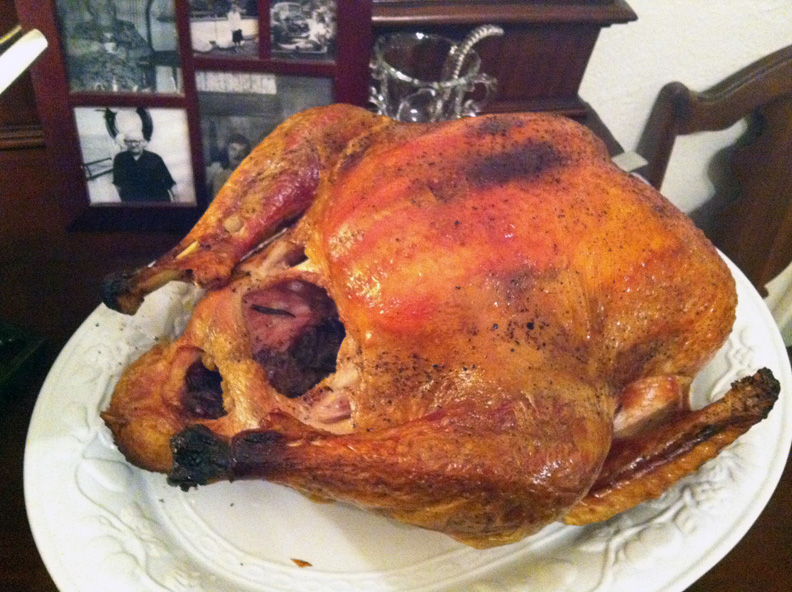
The turkey was not ready for his close-up. Never in a million years would I have dreamed that the humble bird from our early Christmas with my husband’s sons would, a year later, appear on thousands of computer screens around the world. How’d this happen? Yesterday, the WordPress editor (aka “story wrangler”) plucked this little blog out of obscurity and plopped it onto the site’s “Freshly Pressed” portal—where all good bloggers go to log in. In roughly 27 hours, more than 4,000 people visited The Midlife Second Wife, and 42 new subscribers signed up. The post that generated all of the activity, “Where’s Home for the Holidays When You’re Divorced or Remarried?” attracted 83 comments and 109 “likes” from bloggers.  Gosh. I really wish I’d garnished that turkey.

But this post isn’t about our turkey’s less than glamorous visage, and it’s only tangentially about the blog’s 15-minutes of fame. No, this post is about gratitude. The past 27 hours have been wonderfully overwhelming and deeply humbling. So I hope that you won’t mind if I use this essay to express some well-deserved thanks.

  1. To my son, who e-mailed me before all of the hubbub began, to tell me that he loved the post. Matthew, I’m sorry, but I’m about to have an “I’m going to embarrass you moment.” I love and admire you more than words can say.
  2. To my husband, who was the first to comment, who gives me room and space to write, who champions everything that I do, and who—to quote Paul Child, Julia’s husband—”is the butter to my bread and the breath to my life.” John, I love you.
  3. To my stepsons, whom I love more than they might realize, given the brief time we’ve been flung together and the distance that separates us.
  4. To the editors at WordPress for incredible support of a late-blooming blogger.
  5. To all of my friends and family who signed on at the beginning. You are amazing and I love you.
  6. To every new reader of the blog—all of you who subscribed, felt moved enough by the post to give it your much-appreciated thumbs-up, and decided to follow me on Twitter.
  7. To everyone who posted their comments in response to the blog’s message. You have no idea how you have warmed my heart. Many of you wrote to express your own painful experiences about the way divorce has torn your family asunder; many described your own ways of dealing with the holidays; one reminded me—and I hope everyone reading—that it’s not only divorce or remarriage that can shunt holiday traditions sidewise. The wars in which our country has been embroiled have done their own damage—in countless cases irreparable—to the family gathering at the dinner table. One of you wrote to express your poignant wish that you had the right to marry, too. So do I.

To each of you who took the time to post a comment, I promise to reply. It will take me some time to do so, but it’s important to me. You have done me a great honor by your response to my writing.

To all of you reading this, I promise to make every effort to be interesting, honest, and useful in what I post here. Your time is valuable; I don’t want you to feel you are wasting it by reading me.

Finally, there’s just one more thing I want to say before I leave you today.

I’ve yet to share on this blog my love of French films. I bring this up now because there’s a wonderful line in one of my favorites—Red, part of Krzysztof Kieslowski‘s trilogy Three Colors. The character portrayed by Irene Jacob says:

Je me sens quelque chose d’important se passe autour de moi. (Don’t be impressed; I had to look this up on Google Translate.)

“I feel something important is happening around me.”

For the past several weeks, I have felt as though something important were happening around me. (I’ve felt this way before, when John and I fell in love … when my child was first placed in my arms.) It’s an incredibly potent feeling—a feeling of great positivity and light. My Thanksgiving wish for each and every one of you is this: that you experience this feeling at least once in your lives.

Happy Thanksgiving. And thank you.

Share this:

  • Click to share on Facebook (Opens in new window) Facebook
  • Click to share on X (Opens in new window) X
  • Click to share on Pinterest (Opens in new window) Pinterest
  • Click to share on LinkedIn (Opens in new window) LinkedIn
  • Click to email a link to a friend (Opens in new window) Email
  • Click to print (Opens in new window) Print
  • Click to share on Tumblr (Opens in new window) Tumblr
  • Click to share on Pocket (Opens in new window) Pocket
  • Click to share on Reddit (Opens in new window) Reddit
Like Loading...

Where’s Home for the Holidays When You’re Divorced?

21 Monday Nov 2011

Posted by themidlifesecondwife in Food for Thought, Relationships and Family Life

≈ 102 Comments

Tags

Christmas, Divorce, Family, Holidays, Home, Life, Remarriage, Thanksgiving

The turkey I prepared in 2010, when my stepsons celebrated an early Christmas with us.

When my first marriage ended, the day before Thanksgiving in 2003, I took a deep breath upon returning from court and began meal preparations for my first major holiday on my own. I set myself (and my raw nerves) to the comforting task of marinating pears for a compote, then started on the bread-sage stuffing. Why? Because for as long as I can recall, I’ve cooked elaborate dinners for the holidays.

During my first marriage, our family shared hosting duties for the holidays, but the times when it wasn’t my turn didn’t mean I was off the hook. I contributed side dishes and desserts to the groaning board so the burden of cooking an entire meal wasn’t borne by the host. That, however, was all in the past. My son would join me, and my cousin, for my first post-divorce Thanksgiving. That was it. Taking the smallest turkey I’d ever roasted out of the oven, I marveled at its lightness. And cried.

One month later, at Christmas, I said goodbye to all that and performed a variation on the theme. My cousin brought her nephew, my son came with his girlfriend at the time, and I rounded out the rest of the table with a young violinist from the Ukraine, who was studying at the conservatory where I worked. She brought her mother along. And, for the first time in my entire life, turkey was not featured on the table. Instead I prepared a standing rib roast from one of Ina Garten‘s Barefoot Contessa cookbooks.

This was my new family dynamic, and the start of a new tradition.

It can’t have been easy for my son, who at the time was in his early 20s. He was now required to divide all of his holidays in two; the first half of the day was spent with his father, the latter half with me. Those mornings and early afternoons dragged on so! It seemed strange to be alone in the house on a holiday. I probably hugged him far too long and far too tightly when he arrived. But so it went, each year, until the year I remarried.

My new husband had taken a job in Virginia, and I was now living nearly 500 miles from where I grew up and lived my entire life—and 500 miles from my son. Whereas holidays had presented a mere logistical inconvenience, now the geographical stakes were raised to challenging heights. Would I be able to spend at least one holiday with him? And what of my husband’s sons? How and when would we see them? The oldest is in graduate school in Illinois; the youngest had just started college in Ohio.

As it turned out, I wasn’t able to see my son at all that first year after our move. His work schedule simply didn’t allow him enough time off to make the trip. I cannot tell you how that rocked me. Things fared a bit better with the other boys; they drove to Virginia the second week of December to have an early Christmas with us. But again, what orbits they had to navigate! The eldest and his girlfriend drove from Illinois to Ohio to spend time with his mother and brother. Then, with his brother in tow, he drove from Ohio to Virginia. Then it was back around and up to Ohio to drop his brother off, and westward to St. Louis, so his girlfriend could see her family. And back to Illinois. It was like a 1930s movie, where a map of the United States with moving, dotted arrows illustrated a character’s travel progression from Point A to Point Whatever. The mind reels.

Last year, John and I decided that it was our turn to give the kids a break and do the driving. We left for Ohio early in the morning the day before Thanksgiving. Once there, we stayed with my son and his girlfriend. John’s sons joined us the next day, and we all enjoyed Thanksgiving dinner together in a suburb of Cleveland. In a restaurant. For Thanksgiving.

That took some getting used to. Never in my life had I set foot in a restaurant on a major holiday; it went against every cooking and baking gene in my body. I had always felt nothing but sadness for Ralphie and his family in A Christmas Story, forced to eat Christmas dinner at a Chinese restaurant after the Bumpus hounds devoured their turkey.

The meal was traditional enough and tasty enough, I suppose. But that was hardly the point. The goal was to be together: one scattered family gathered for a few brief hours around a table laden with food that might (or might not) allow us (allow me?) to pretend we were in the old homestead, however new that homestead might be.

It was more than enough that we were together and healthy.

It’s true, as the old song says, that there’s no place like home for the holidays. But when you create a new family, and circumstances toss your family hither and yon with no viable base of operations, it helps to remember another song—one that can serve to brighten your thoughts with a clarity that allows comfort and joy to shine through:

Home is where the heart is.

Share this:

  • Click to share on Facebook (Opens in new window) Facebook
  • Click to share on X (Opens in new window) X
  • Click to share on Pinterest (Opens in new window) Pinterest
  • Click to share on LinkedIn (Opens in new window) LinkedIn
  • Click to email a link to a friend (Opens in new window) Email
  • Click to print (Opens in new window) Print
  • Click to share on Tumblr (Opens in new window) Tumblr
  • Click to share on Pocket (Opens in new window) Pocket
  • Click to share on Reddit (Opens in new window) Reddit
Like Loading...

Marlo & Me—Act I

18 Friday Nov 2011

Posted by themidlifesecondwife in Relationships and Family Life, The Cultured Life, The Writing Life, Well-Dressed

≈ 6 Comments

Tags

Baby Boomers, Beauty, Entertainment, Family, Hair care, Life, Marlo Thomas, Nostalgia

“COMPLICATED HAIR”

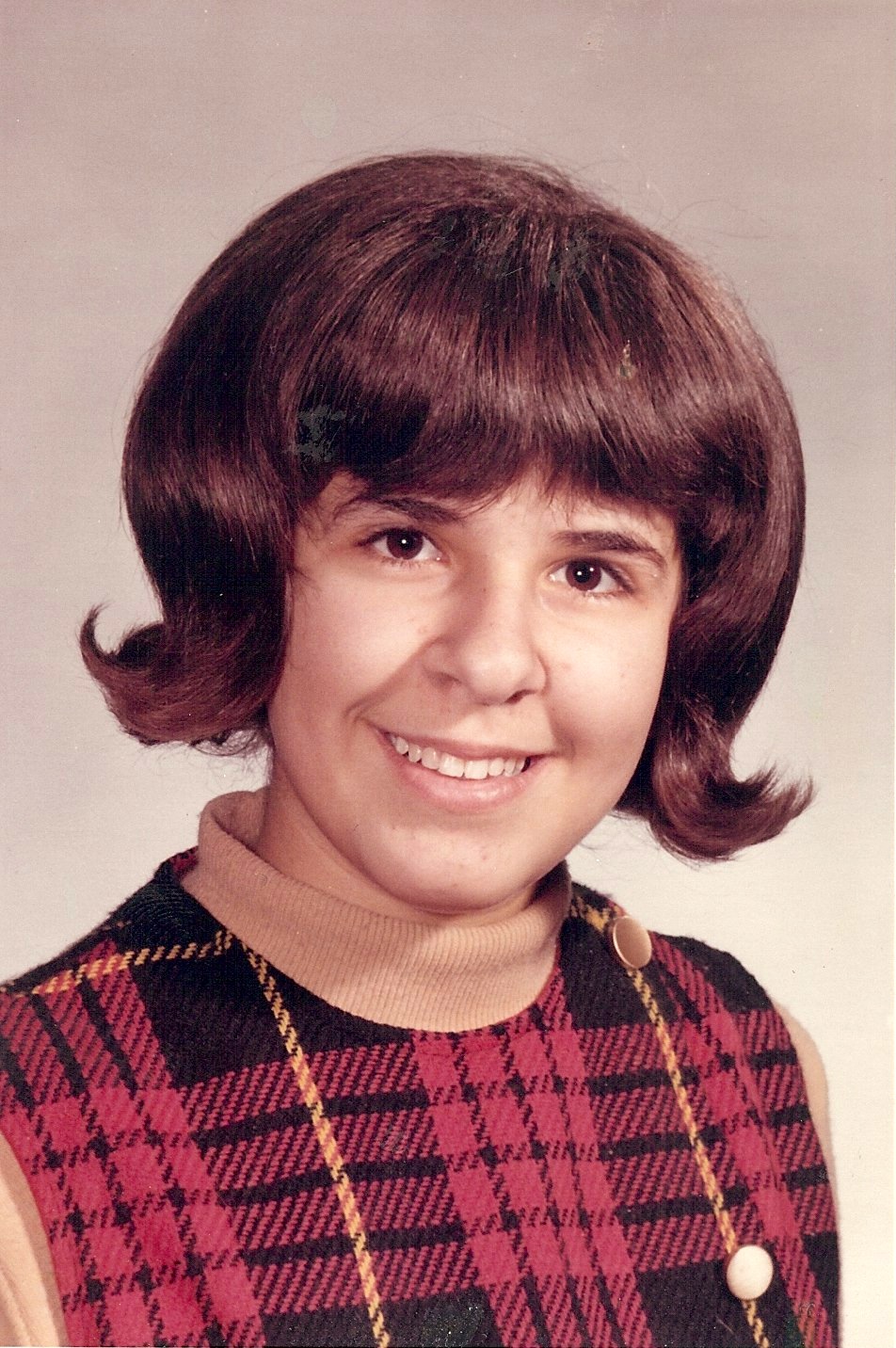
Had fashions in the late 1960s been otherwise, I would not have the strength of character that I possess today. I was born with complicated hair—thick, unmanageable, impossibly curly hair. And not the good kind of curly, either—the Andie McDowell/Julianna Margulies-kind of curly—just coarse and wiry and frizzy hair. This frizzled look would be en vogue today, when stylists spend considerable time crafting the look for runway models—a look that used to send me reeling in horror from the bathroom mirror. No, mine was the era of Carnaby Street, Twiggy, and the Summer of Love, and I had complicated hair. The fashion at the time was either cropped short, like the iconic pixie cut Vidal Sassoon created for Mia Farrow in Rosemary’s Baby, or long, sleek, and straight, like Jean Shrimpton or Julie Christie—all blondes, I might add. Relief came for a little dark-haired girl in the form of a beautiful brunette named Marlo Thomas, who, in the landmark television series That Girl, wore her straight glossy hair in a flip with bangs. The fact that Marlo was Italian and Lebanese, just like me, and had a father with whom I’d been photographed earlier in the decade, clinched the deal. She—that girl!—would be my role model. God knows, I needed one. I had complicated hair.

Credit: Marlo Thomas' Facebook page

“You have to suffer to be beautiful.”

That’s my godmother, “Aunt Fannie,” speaking. It’s 1968, and I’m in the seventh grade at St. Mary’s School in Elyria, Ohio. We’re having our class pictures taken in a few days, and my parents have driven me to her house to have my hair done.

Perhaps I should explain.

Aunt Fannie was a licensed beautician. (That’s what they called hair stylists in those days.) My godfather, Uncle Bill, was a gifted carpenter, and although he was not a professional contractor, he built their lovely ranch home in a rural part of Elyria from the ground up, and turned one of their basement rooms into a hair salon for my godmother. My father drove my mother there to have her hair done each week, and I was always in tow. With school-picture day looming, I begged and pleaded with my parents to let Aunt Fannie cut my hair so that I would have bangs and a flip, just like That Girl.

I finally wore them down. It wasn’t long before I was seated in the chair that swiveled around like a carnival ride. Aunt Fannie’s fingers wielded the silver scissors like some magician’s wand—snip! snip! snip! I had been turned away from the mirror the entire time, and couldn’t wait to see my idol’s impeccable hairdo in place of my tangled Medusa mane. When she spun me around, I was shocked.

I looked awful.

None of us had really taken my thick frizz into account when calibrating the outcome of my longed-for flip hairdo with bangs. The flip flopped, and I looked like a Labradoodle.

An Australian male Labradoodle at 9 month of age.I hesitate to say this, because you’ll think that I spent my entire childhood in tears, but I have to tell you that I cried. Not a full-throated cry—just a whimper, with a steady stream running down my cheeks.

“Isn’t–isn’t there anything you can do?” I asked my godmother, sniffling. Flat irons had not yet been invented. She thought a moment, then brightened.

“We can straighten it!”

My father, who had been watching television in the other room, walked by just in time to hear this. “Not if I have anything to say about it!” he thundered. “She has beautiful hair. You never should have cut it in the first place.”

“But George, look at her,” my mother said. “She can’t go around looking like this!”

“I can’t go around looking like this, Daddy.” I thought he should know where I stood on the matter.

The tension in the air was palpable. My parents exchanged words. Aunt Fannie busied herself by rearranging her hair clip drawer. I escaped upstairs to soothe my nerves with a tall glass of 7-Up. When I came back down, the charged atmosphere had eased. I’ll never know who convinced him—my mother or Aunt Fannie—but my father had backed down. Aunt Fannie was mixing the chemicals that would solve the crisis and turn me into “That Girl” for my school pictures.

“This stuff stinks!” I cried when she began stirring the mixture near me. And when she started combing the goop through my hair, my eyes began to water—and not from tears. “It burns!”

“You have to suffer to be beautiful,” she replied sagely.

I don’t remember how long I sat in that chair. It seemed like months. But I finally was directed to the shampoo bowl, and felt the cool relief of water soothe away the stinging, rotten-egg smell of the straightener. Aunt Fannie washed and conditioned my hair and combed it through. I was entranced! When I touched it, it felt smooth and sleek; I had never experienced such a sensation in relation to my own hair before. My head looked smaller, too. It wasn’t my hair anymore; it wasn’t me. It was better. New and improved, as the commercials used to say.

Aunt Fannie set my hair in rollers and sat me under the dryer, where I perused the latest movie magazines. When I was dry—cheeks red and hot from the heated air, rolled hair crisp to the touch—Aunt Fannie set me back in the swivel chair, where she began unpinning the rollers, vigorously brushing out my new hair.

It gleamed. It shined. I had never seen anything like it. She sprayed hairspray all over me—the air was thick with it. I sneezed and coughed. But I looked beautiful.

You have to suffer to be beautiful.

And you are! Look at that girl!

To be continued …

Share this:

  • Click to share on Facebook (Opens in new window) Facebook
  • Click to share on X (Opens in new window) X
  • Click to share on Pinterest (Opens in new window) Pinterest
  • Click to share on LinkedIn (Opens in new window) LinkedIn
  • Click to email a link to a friend (Opens in new window) Email
  • Click to print (Opens in new window) Print
  • Click to share on Tumblr (Opens in new window) Tumblr
  • Click to share on Pocket (Opens in new window) Pocket
  • Click to share on Reddit (Opens in new window) Reddit
Like Loading...

Marlo & Me—Prologue

16 Wednesday Nov 2011

Posted by themidlifesecondwife in Relationships and Family Life, The Cultured Life, The Writing Life, What's the Buzz?

≈ 12 Comments

Tags

blogs, Broadway, Entertainment, Marlo Thomas, Theater, writing

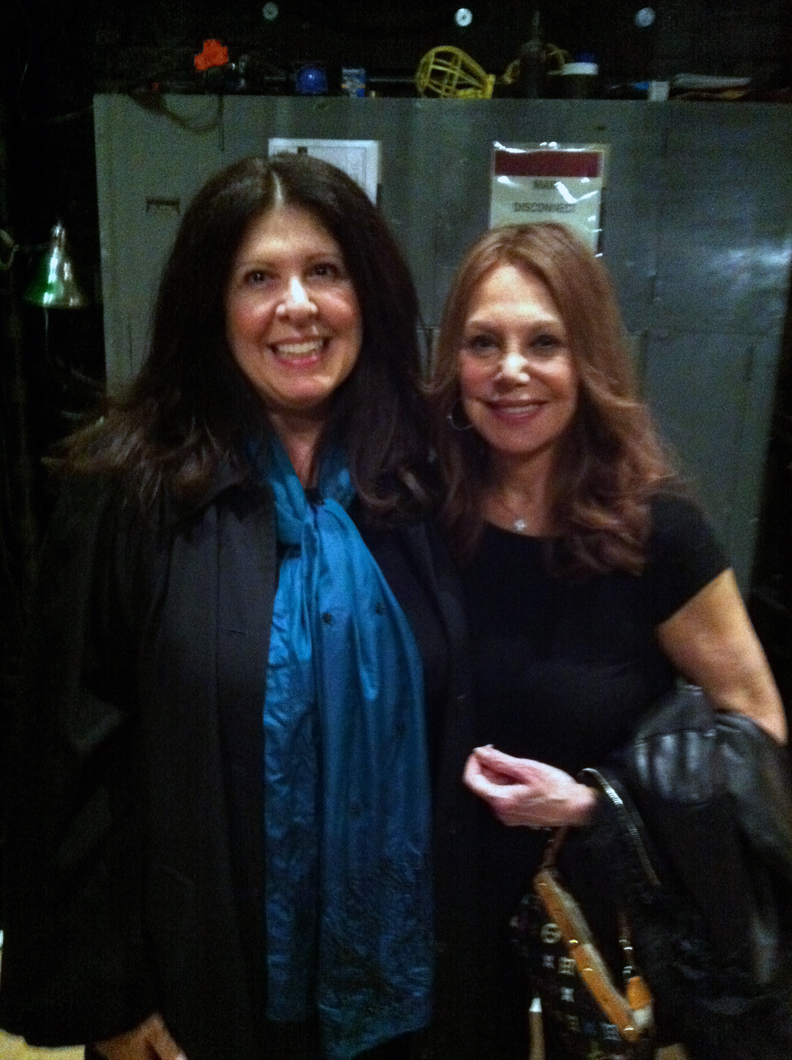
It’s only taken 50 years, but last night I was photographed with another member of the famed Thomas family: Danny’s daughter Marlo. Photo credit: John Rich

The Scene:
Backstage at the Brooks Atkinson Theatre on Broadway.

The Time:
Present day. An evening performance of the Ethan Coen/Elaine May/Woody Allen play Relatively Speaking, and immediately afterward.

The Players:
Marlo Thomas (Award-winning actress, author, producer, and activist); Marci Rich (The Midlife Second Wife); John Rich (The Midlife Second Husband)

Synopsis:
A writer and blogger from Richmond, Virginia, learns that an essay she submitted to a  contest sponsored on Facebook by Marlo Thomas was selected as a winner. Her prize? Two free tickets to see the actress perform on Broadway in a one-act comedy, George is Dead, written by Elaine May—part of a three-act play called Relatively Speaking. The writer and her husband embark on a whirlwind, 24-hour trip by train to New York City to see the play and, hopefully, meet the actress. Waiting backstage after the performance, the writer reflects on significant moments in her life in which either the actress or the actress’ late father, famed entertainer Danny Thomas, played an off-stage role.

Prologue: The Writer Remembers

It must have been 1960 or 1961. I was five or so. I remember because the dress I’m wearing in the photograph was my favorite dress when I was in kindergarten. The famous entertainer Danny Thomas had come to Cleveland, and I had my picture taken with him for a Cleveland-area newspaper. My father is also in the picture; he’s the one holding me, hoping that I’ll stop crying long enough for the man with the camera to get his picture.

I remember the evening well. My father, George Abookire, had been a regional volunteer for ALSAC, the fundraising organization that Danny Thomas had established to help him realize his dream: a hospital dedicated to children who were suffering from cancer. ALSAC had benefited from the work of volunteers such as my father, who helped raise money for what would become St. Jude Children’s Research Hospital. A keynote ALSAC event was taking place at a ballroom in a Cleveland hotel, and the guest of honor was Danny Thomas himself.

I knew who Danny Thomas was; he was revered in our house for several reasons. To begin with, he was a first-generation American born to Lebanese parents, just like my father. Danny Thomas was born in Toledo, Ohio; my father was born just 90 miles east, in Elyria, Ohio. Danny Thomas had married a woman of Sicilian descent; so had my father. There is family lore, possibly apocryphal, that it was a first cousin of Danny’s, Ralph Jacobs (also from Toledo), who had married my father’s first cousin, Renée Mady of Windsor, Canada.

Even more important than these connections was the fact that Danny Thomas’ great success in the entertainment industry—in films, nightclubs, and as the star and producer of his own television shows—brought tremendous pride to the Lebanese community. At a time when minority ethnic and racial groups were not represented on television, Danny Thomas, a man of Lebanese heritage, brought a slice of our culture to millions of homes across America. The importance of this cannot be overstated. This meant everything to a little girl growing up in Elyria, Ohio, who looked different from everyone else because of her thick, dark curly hair; a nose that was decidedly not Anglo-Saxon; and an unpronounceable last name. Danny Thomas’ presence on television validated my ancestral identity. My parents and I adored Make Room for Daddy and watched it religiously; the episodes featuring Danny Williams’ Uncle Tonoose, played by Hans Conried, were especially beloved. Uncle Tonoose reminded me of my grandfather.

There was one small problem.

Like most children, I was highly impressionable, especially when it came to visual images. My first infant memory is of a male relative carrying me in my grandmother’s house; I glimpsed my reflection in the mirror hanging on the wall. So much of what I would later see on television as a child remains as vivid to me now as that first mirror image; they are imprints, effortlessly recalled. A nightmare that I had when I was still a baby forms my second memory. The eye logo employed by CBS turned menacing in my dream. I awoke crying in my crib, frightened and inconsolable.

And so I well remember the little girl who played Linda, Danny Thomas’ daughter in his television show. Like me, she had dark hair. Like me, she had a slightly mischievous spirit. And, like me, she could sometimes exasperate her father to distraction, eliciting a reaction from him that, like the CBS eye, suggested menace: a raised voice, a sprint across a room to chase the little imp.

I had been told that I would be meeting Danny Thomas that evening in Cleveland. And as the evening wore on, I remember growing tired and cranky. It was a school night, and the back of my legs itched from the rough velvet seats on which we’d been sitting for what seemed like hours, waiting for the star to make his entrance. These feelings, then, combined with the growing awareness that this man could very well begin yelling at me as he occasionally yelled at his television daughter, filled me with apprehension.

The room darkened, and a great spotlight appeared. Danny Thomas was entering the ballroom. My father grabbed my hand and ran with me over to the photo op.

“You’re going to have your picture taken with Danny Thomas,” he said, smiling. My reaction surprised him. I started to cry.

My poor father. Poor Danny Thomas. My father tried to comfort me, and Danny Thomas—no doubt disappointed by my tears—nevertheless rose to the occasion and posed, smiling, behind us.

Years later, reading the newspaper clipping, I learned something new. After the picture was taken, I apparently stopped crying, clambered into Danny Thomas’ arms, and gave him a kiss.

Strange phenomena, memories. I don’t remember doing that at all. But it was in the paper, so it must have happened.

To be continued …

Share this:

  • Click to share on Facebook (Opens in new window) Facebook
  • Click to share on X (Opens in new window) X
  • Click to share on Pinterest (Opens in new window) Pinterest
  • Click to share on LinkedIn (Opens in new window) LinkedIn
  • Click to email a link to a friend (Opens in new window) Email
  • Click to print (Opens in new window) Print
  • Click to share on Tumblr (Opens in new window) Tumblr
  • Click to share on Pocket (Opens in new window) Pocket
  • Click to share on Reddit (Opens in new window) Reddit
Like Loading...

A Tale of Two Deaths: Losing My Mother to Alzheimer’s—Part I

14 Monday Nov 2011

Posted by themidlifesecondwife in Relationships and Family Life, The Healthy Life, Transitions

≈ 18 Comments

Tags

Alzheimer's disease, Conditions and Diseases, Death, Dementia, Grief Loss and Bereavement, Health, Life, Neurological Disorders

A note to readers: This post was honored by BlogHer, the Women’s Publishing Network, with a Voice of the Year award for 2012. I have since retitled it and it will appear as Part One of Have You Met My Daughter? My Mother, Her Alzheimer’s, and Me in an e-book anthology jointly published by BlogHer and Open Road Media. I am working to complete Have You Met My Daughter? and will post forthcoming essays, in serial form, on this blog.

A person with dementia (or Alzheimer’s Disease) suffers two deaths. The first death occurs when you discover the illness taking hold, erasing the vivacious mind and the vital spirit of the person you once knew. The second death is when the physical body expires. For these reasons, a bereaved person who loses a loved one—first to dementia, later to death—grieves twice. And although much has been written about mid-lifers—the so-called “sandwich generation“—who are caught between caring for ill or elderly parents while still raising children, perhaps there is room in the literature for one more account. This November, to mark National Alzheimer’s Disease Awareness Month and National Family Caregivers’ Month—and in honor of my mother—I am beginning to write a series of essays about how I loved my mother and how I lost her—not once, but twice.

“Have you met my daughter?”

This was the question my mother, who had impeccable manners, regularly posed to co-workers or acquaintances when introducing me to them for the first time.

“Have you met my daughter?”

This was the question my mother regularly posed to the women seated with her at a table in the secured-wing of the assisted living facility where I regularly visited her. Without fail, each and every time I entered the room, she would ask these same women:

“Have you met my daughter?”

There was, of course, tremendous solace in the fact that despite her illness, my mother did recognize me as her daughter. Nevertheless, it was heartbreaking to see how her memory, her very sense of self, had deteriorated.

The signs had been there for a while; it just took time for me to connect the dots. My mother had always been what used to be called “high-strung.” She suffered from panic attacks, and was fearful of many things, including learning how to drive after my father died.

She had also always been something of an pack-rat. Today, there is a name for this: compulsive hoarding. But at the time when I was grappling with this issue in terms of my own mother, I did not know it was an illness for which there might be a treatment; I simply put it down to another of my mother’s eccentricities. I would clear out as much of the clutter as she would permit (there remained piles that I was forbidden to touch), and a week or so later, my efforts were obliterated. It was not at all unlike Sisyphus pushing his boulder up the mountain.

After several years of this, the hoarding had gotten so out of control that I began to fear for my mother’s safety. I was able to convince her that she needed help; she allowed me to hire a cleaning woman to do her laundry, dust, vacuum the floor, and keep the bathroom and kitchen clean.

It was ultimately the cleaning woman—or, more to the point, the existence of the cleaning woman—which brought home to me the awful realization that something was far more seriously wrong with Mom than eccentric hoarding.

She and the cleaning woman didn’t hit it off, largely because Mom did not like anyone else touching her things. The woman, goodhearted and a good worker, called me to complain about what she could see was a losing battle. I was struggling over how to handle the situation when it resolved itself. Mom called me late one night in a real panic; I needed to come over at once. There was a terrible problem.

When I arrived, she pointed to a hole in the dining-room window screen—no more than two inches in diameter.

“That woman you hired is stealing from me,” she said in a tremulous voice tinged with outrage. “Do you see that? That’s how she’s getting in. She’s sneaking in, crawling in through that hole.”

To be continued …

NOTE: The Alzheimer’s Association is not responsible for information or advice provided by others, including information on websites that link to Association sites and on third party sites to which the Association links. Please direct any questions to weblink@alz.org.

Share this:

  • Click to share on Facebook (Opens in new window) Facebook
  • Click to share on X (Opens in new window) X
  • Click to share on Pinterest (Opens in new window) Pinterest
  • Click to share on LinkedIn (Opens in new window) LinkedIn
  • Click to email a link to a friend (Opens in new window) Email
  • Click to print (Opens in new window) Print
  • Click to share on Tumblr (Opens in new window) Tumblr
  • Click to share on Pocket (Opens in new window) Pocket
  • Click to share on Reddit (Opens in new window) Reddit
Like Loading...

What Are Your Secrets (to a Happy Relationship)?

07 Monday Nov 2011

Posted by themidlifesecondwife in Relationships and Family Life

≈ 10 Comments

Tags

Advice, BlogHer, Relationships, The Midlife Second Wife

You know, I’m not the only one with opinions around here.

My readers are smart, savvy, funny, and wise. I can tell from the comments they post and the e-mails they send me.

So, for a change of pace, I thought that today it might be fun to let them do some of the work. And by them, I mean you. If you’re reading this on BlogHer, you’re invited to chime in, too!

What are your secrets to a happy relationship?

I’ve created a new page on my site where I’ll be listing your suggestions.

If you prefer to remain anonymous, that’s fine. Or you may simply use your initials (although I’d love to know what state you’re from). If you’d rather shout from the rooftops your secret to a happy, healthy relationship, then please, by all means, include your full name and the state in which you live.

If you have a favorite quote about the topic that you’d like to share, please share that, too! All I ask is that you include the name of the person you’re quoting, and, if you discovered the quote in a book, the name of the book. That way we can all expand our reading list.

It’s easy to participate. Simply share your quote in the comment section at the bottom of this post—either on The Midlife Second Wife’s site or where the post appears on BlogHer. You may also send an e-mail to marci dot keyword at gmail dot com.

That’s it! I look forward to reading your additions to our compendium of wisdom.

Thanks & love,

Marci, aka
TMSW

Share this:

  • Click to share on Facebook (Opens in new window) Facebook
  • Click to share on X (Opens in new window) X
  • Click to share on Pinterest (Opens in new window) Pinterest
  • Click to share on LinkedIn (Opens in new window) LinkedIn
  • Click to email a link to a friend (Opens in new window) Email
  • Click to print (Opens in new window) Print
  • Click to share on Tumblr (Opens in new window) Tumblr
  • Click to share on Pocket (Opens in new window) Pocket
  • Click to share on Reddit (Opens in new window) Reddit
Like Loading...
← Older posts
Newer posts →

Twitter Updates

Tweets by midlife2wife

Company

  • 183,279 Guests since 8/24/11

Receive notifications of new posts by email.

Join 1,202 other subscribers

Topics

  • Current Events
  • Food for Thought
  • Giveaways
  • House and Garden
  • Humor Me
  • Indulgences
  • Inspiring Women
  • LifeStyles
  • Love
  • Midpoints
  • Monday Morning Q & A
  • Money Matters
  • Nostalgia
  • Portraits of the Artist
  • Product Reviews
  • Relationships and Family Life
  • Remarriage
  • Second Weddings
  • Second Wife Hall of Fame
  • Secrets to a Happy Relationship
  • Special Events
  • Technology
  • The Beautiful Life
  • The Cultured Life
  • The Healthy Life
  • The Life Poetic
  • The Musical Life
  • The Reading Life
  • The Well-Dressed Life
  • The Writing Life
  • Transitions
  • Travel
  • Well-Dressed
  • What's the Buzz?

RSS Feeds

  • RSS - Posts
  • RSS - Comments

Archives

  • July 2019 (1)
  • December 2014 (1)
  • November 2014 (1)
  • October 2014 (2)
  • August 2014 (1)
  • June 2014 (2)
  • May 2014 (2)
  • April 2014 (3)
  • March 2014 (3)
  • February 2014 (3)
  • January 2014 (4)
  • December 2013 (9)
  • November 2013 (2)
  • October 2013 (3)
  • September 2013 (6)
  • August 2013 (5)
  • July 2013 (6)
  • June 2013 (2)
  • May 2013 (3)
  • April 2013 (1)
  • March 2013 (1)
  • January 2013 (3)
  • December 2012 (7)
  • November 2012 (7)
  • October 2012 (12)
  • September 2012 (9)
  • August 2012 (6)
  • July 2012 (4)
  • June 2012 (5)
  • May 2012 (4)
  • April 2012 (1)
  • March 2012 (10)
  • February 2012 (8)
  • January 2012 (9)
  • December 2011 (10)
  • November 2011 (30)
  • October 2011 (18)
  • September 2011 (12)
  • August 2011 (2)

Networks

NetworkedBlogs
Blog:
The Midlife Second Wife ™
Topics:
Relationships, Life, After 50
 
Follow my blog

bloglovin

The Blogs of Others

  • A Baby Boomer Woman's Life After 50
  • A.B. Westrick
  • An Empowered Spirit
  • Apart from my Art
  • Author Meg Medina
  • Better After 50
  • Books is Wonderful
  • Darryle Pollack: I Never Signed Up For This
  • Diana Patient: Photography
  • Empty House, Full Mind
  • GenerationBSquared
  • Grandma's Briefs
  • Grown and Flown
  • Midlife at the Oasis
  • Midlife Boulevard
  • Midlife Mixtape
  • Reason Creek
  • Relocation: The Blog
  • Romancing Reality
  • Second Lives Club
  • The Boomer Rants
  • WHOA Network
  • WordCount

COPYRIGHT © 2011 — 2024  Marci Rich and The Midlife Second Wife™ Keyword Communications, LLC. All Rights Reserved.

Blog at WordPress.com.

  • Subscribe Subscribed
    • The Midlife Second Wife ™
    • Join 450 other subscribers
    • Already have a WordPress.com account? Log in now.
    • The Midlife Second Wife ™
    • Subscribe Subscribed
    • Sign up
    • Log in
    • Report this content
    • View site in Reader
    • Manage subscriptions
    • Collapse this bar
 

Loading Comments...
 

    %d