• An Open Book: TMSW’s Library
  • Copyright
  • Food for Thought Recipes
  • My Right Eye: A Medical Memoir by Marci Rich
  • Praise and Awards
    • Writing Badges
  • The Midlife Second Wives’ Hall of Fame
  • Who is The Midlife Second Wife?
    • Contact
    • FAQ
  • Read Me On The Huffington Post

The Midlife Second Wife ™

~ The Real and True Adventures of Remarriage at Life's Midpoint

The Midlife Second Wife ™

Tag Archives: Cooking

Holiday Candied Pecans

09 Wednesday Nov 2011

Posted by themidlifesecondwife in Food for Thought

≈ 2 Comments

Tags

Cooking, Food, Holiday Baking, Pecans, recipes

Bah, humbug. The news isn’t good for those of us beginning to plan our holiday menus. The Associated Press reported today that due to drought in parts of the South and high demand from China, the price of pecans is going up. In 2008, the retail price for a pound of pecans was $7; last year it rose to $9, and this year experts are predicting that consumers can expect to pay around $11 per pound. It’s a good thing I still have a stash stored in the freezer, because in our house, a holiday without candied pecans is like a Yuletide without It’s a Wonderful Life.

I typically make candied pecans around Thanksgiving, and this is one of my favorite cooking traditions. They are easy to prepare, they keep beautifully throughout the season if stored in an airtight tin, and they make wonderful hostess gifts if you’ve a round of parties to attend. And while we’re talking about storage, the pecans in my freezer will be just fine. According to New Mexico State University’s Cooperative Extension Service (College of Agriculture and Home Economics), shelled pecan halves will keep from 12 to 24 months if stored below freezing (20- to 30-degrees Fahrenheit).

HOLIDAY CANDIED PECANS

—Makes 6 cups. You can also divide this recipe in half.

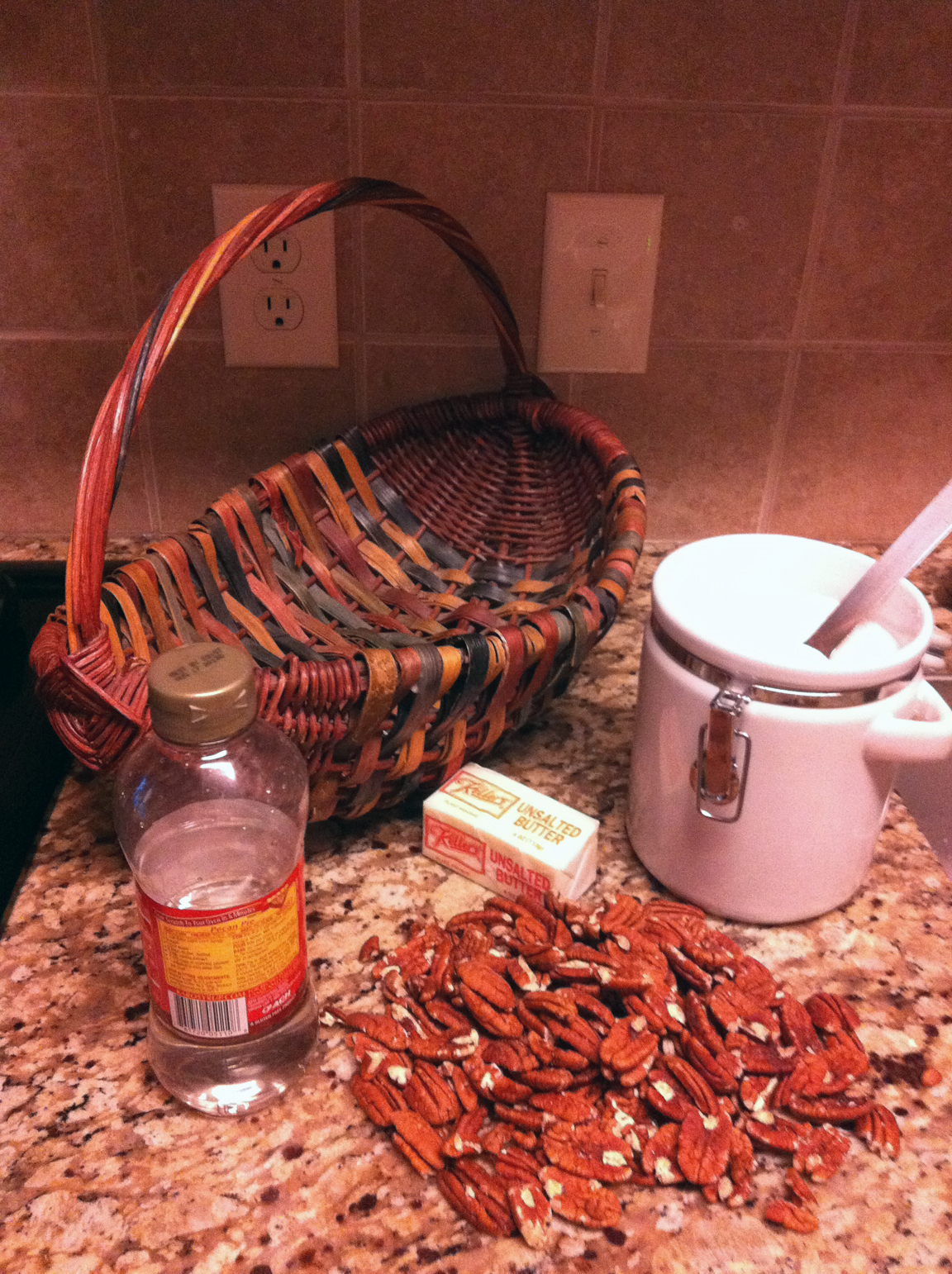
6 cups pecan halves
4 tablespoons unsalted butter
1 cup light corn syrup
1 cup sugar, divided*

1. Preheat oven to 250-degrees. Divide pecans in two batches and spread out evenly on two 13 x 9 x 2-inch baking pans.

2. In a 4-quart saucepan, melt the butter over medium heat. With a wooden spoon or a silicone spatula, stir in the corn syrup and one-half cup of sugar. Stirring constantly, bring to boil over medium heat. Once the candied syrup has reached the boiling point, allow it to boil—without stirring—for five minutes.

3. Pour the hot syrup over the nuts, taking care to stir the batches constantly (and quickly) in order to coat them evenly. (Be careful—the syrup will be hot.) At this point, I find that using a silicone spatula works better than a wooden spoon; the candied syrup doesn’t stick to it as much.

4. Bake in a preheated 250-degree oven for one hour, stirring several times. I stir the trays of pecans at four 15-minute intervals, using my kitchen timer as a reminder.

5. After removing the pans from the oven, sprinkle the pecans with the remaining one-half cup of sugar and toss to coat evenly.

6. Spread the pecans onto sheets of freezer paper (shiny side up) that you’ve set out on your work surface, and add additional amounts of sugar until you’ve nicely separated them into their individual halves and coated them with sugar. You can also perform this step on greased cookie sheets, but I find that the freezer paper eliminates the need for additional butter and works just as well. It also gives you a wider surface area in which to work.

7. Allow the pecan halves to cool, then store them in tightly covered containers.

* Plus additional sugar for coating

Share this:

  • Share on Facebook (Opens in new window) Facebook
  • Share on X (Opens in new window) X
  • Share on Pinterest (Opens in new window) Pinterest
  • Share on LinkedIn (Opens in new window) LinkedIn
  • Email a link to a friend (Opens in new window) Email
  • Print (Opens in new window) Print
  • Share on Tumblr (Opens in new window) Tumblr
  • Share on Pocket (Opens in new window) Pocket
  • Share on Reddit (Opens in new window) Reddit
Like Loading...

Sally Field of Greens

02 Wednesday Nov 2011

Posted by themidlifesecondwife in Food for Thought

≈ Leave a comment

Tags

Cooking, Daniel Day-Lewis, Doris Kearns Goodwin, Food, Joseph Gordon-Levitt, recipes, Salads, Sally Field, Steven Spielberg

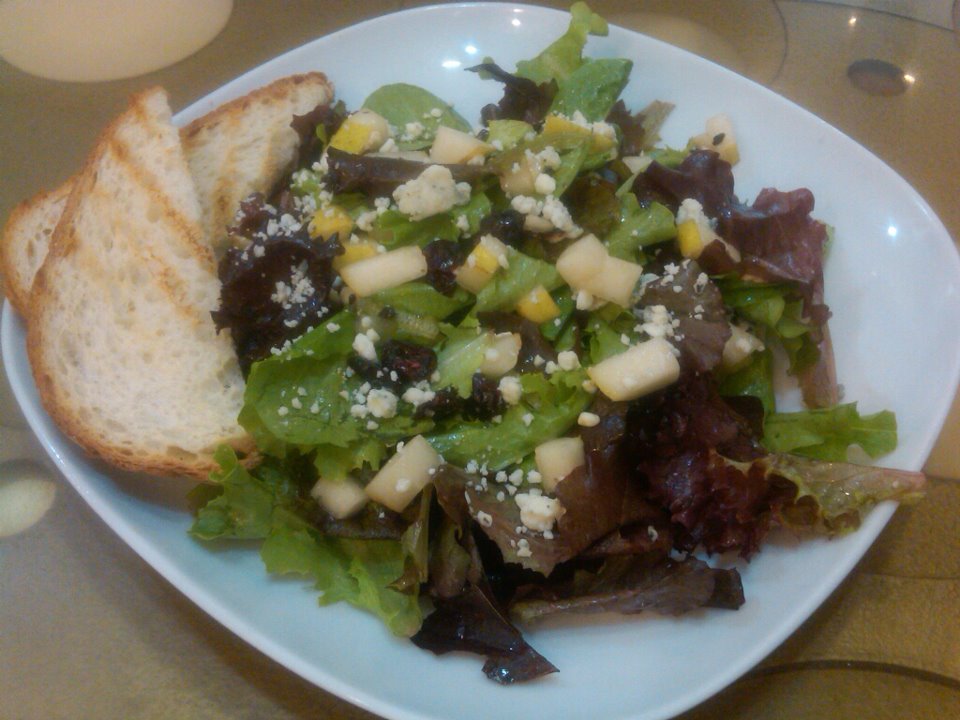
The stars are out here in Richmond, Virginia, where filming got underway last month for Lincoln, directed and co-produced by Academy Award-winning filmmaker Steven Spielberg. The film, based on Doris Kearns Goodwin’s book Team of Rivals, stars Academy Award winners Daniel Day-Lewis as Abraham Lincoln and Sally Field as Mary Todd Lincoln. And although I haven’t seen any bold-face names yet, John and I did have a bite to eat last Sunday at Lift Coffee Shop & Café, which features such charming additions to its menu as a HAM-iel Day Lewis sandwich (grilled on sourdough bread with ham, pineapple, and provolone, and topped with honey and barbecue sauce); a delicious BLT—the Joseph Gordon Lettuce—named in honor of actor Joseph Gordon-Levitt, who portrays Robert Todd Lincoln; and a tasty-looking salad, the Sally Field of Greens. Lift also serves up a wonderful cup of coffee.

My thanks to Stephanie Garnett, manager of Lift, for her generosity in sharing this recipe with The Midlife Second Wife!

For more information about film production in Virginia, please visit the website for the Virginia Film Office.

Sally Field of Greens
Serves 2

1 package field greens or spring mix, washed and dried
3 ounces diced ripe pear (peeled)
2 ounces Craisins
1-1/2 ounces crumbled Gorgonzola cheese
Balsamic vinaigrette
Crumbled Gorgonzola

Fill a salad bowl with the greens. Toss with pear, Craisins, and 1-1/2 ounces of crumbled Gorgonzola. Drizzle with Balsamic vinaigrette and top with additional crumbled Gorgonzola.


Share this:

  • Share on Facebook (Opens in new window) Facebook
  • Share on X (Opens in new window) X
  • Share on Pinterest (Opens in new window) Pinterest
  • Share on LinkedIn (Opens in new window) LinkedIn
  • Email a link to a friend (Opens in new window) Email
  • Print (Opens in new window) Print
  • Share on Tumblr (Opens in new window) Tumblr
  • Share on Pocket (Opens in new window) Pocket
  • Share on Reddit (Opens in new window) Reddit
Like Loading...

Tom Valenti’s Ham Hock and Split Pea Soup

26 Wednesday Oct 2011

Posted by themidlifesecondwife in Food for Thought

≈ Leave a comment

Tags

Cooking, recipes, Soups, Split Pea Soup

SplitPeaHam_0801SplitPeaSmallDice_0797SplitPeaPeas_0800SplitPeaGarlic_0798
SoakingPeas_0796SplitPeaAddingStock_0802
SplitPeaHam_0803SplitPeaSoupsOn_0804

The Midlife Second Wife’s photostream on Flickr.

Several years ago, I purchased a wonderful cookbook, Soups, Stews, and One-Pot Meals. The book’s co-author, chef Tom Valenti, is acclaimed in the food world for his two New York City restaurants, Ouest and ‘Cesca; the praise of such redoubtable food critics as Ruth Reichl and Gael Greene; being named one of the country’s “Ten Best Chefs” by Food & Wine magazine; and his four cookbooks, to list just a few reasons. Chef Valenti is also a humanitarian and philanthropist—CNN deemed him a “national hero” for establishing Windows of Hope, a nonprofit organization that provided aid to the families of food-service workers killed during the World Trade Center attack on September 11.

He’s also one heck of a nice guy.

In my kitchen, the advent of autumn is meaningless unless I prepare Chef Valenti’s Ham Hock and Split Pea Soup to herald its arrival, and I make it religiously throughout the winter. Indeed, the very act of creating this soup is akin to a religious act for me—using my chef’s knife to render the vegetables into the “small dice” he requires, sautéeing the aromatic ingredients, tossing the fragrant marjoram into the pot…the entire process is a comforting series of rituals, and the result yields one of my favorite comfort foods. I wanted to share the recipe with you here, but not without his permission. I sent my request to the e-mail address on the website for Ouest, and then turned my attention to the business of downloading the iOS5 software for my iPhone—a process that took about two hours. When things were back up and running, I rather hoped to see an e-mail reply from one of Chef Valenti’s employees, but the e-mail cupboard was bare. What I did notice, however, was a voice message alerting me to a call I’d missed while my iPhone was out-of-pocket. Chef Tom Valenti took the time to telephone me, leaving a message giving me his permission to publish the recipe on The Midlife Second Wife.

Yes. A heck of a nice guy. And one phenomenal chef with a great recipe for split pea soup. I like to serve this with a crusty French baguette and a hearty cheddar cheese. Enjoy!

HAM HOCK AND SPLIT PEA SOUP
by Tom Valenti and Andrew Friedman
from Tom Valenti’s Soups, Stews, and One-Pot Meals
(Scribner, 2003)

Serves 6

2 cups green split peas, picked through, small stones discarded
2 tablespoons olive oil
1 large carrot, peeled and cut into small dice
1 medium Spanish onion, peeled and cut into small dice
1 stalk celery, cut into small dice
Coarse salt (I use Kosher salt)
Freshly ground black pepper
Sugar
1 large clove garlic, smashed and peeled
1 bay leaf
3 sprigs marjoram or thyme
2 quarts store-bought, reduced-sodium vegetable or chicken broth, homemade   Vegetable or Chicken Stock (page 244 of Valenti’s book), or a combination.
2 pounds smoked ham hocks
Extra-virgin olive oil
2 tablespoons fresh thyme leaves or Garlic Croutons (page 233 of Valenti’s book), optional

1. Put the split peas in a bowl and cover with cold water. Set aside.
2. Heat the oil in a large, heavy-bottomed pot over medium heat until hot but not smoking. Add the carrot, onion, and celery; season with salt, pepper, and a pinch of sugar; and cook, stirring, until the vegetables soften, 5 to 7 minutes. Add the garlic and cook for another 2 minutes.
3. Drain the split peas and add them to the pot. Add the bay leaf, marjoram, broth, and ham hocks. Give a good stir and bring the liquid to a boil over high heat, continuing to stir to keep the peas from scorching. Lower the heat, cover, and simmer for 1 hour.
4. Use tongs or a slotted spoon to remove the ham hocks from the pot. Set them aside on a plate. Cook the soup for 30 minutes longer, or until the peas and other vegetables have completely broken down and the soup has thickened considerably. If it becomes too thick, add more stock or water (see note).
5. While the soup is simmering, and as soon as the ham hocks have cooled enough to work with, use your hands to remove the meat from the bones, shredding it as you work. There won’t be a lot of it, but what is there is very flavorful. Set the meat aside.
6. When the soup is done, use tongs or a spoon to remove and discard the bay leaf and marjoram springs. Taste and correct seasoning, bearing in mind that the bits of ham are salty. Add the reserved ham to the pot. If not serving immediately, let cool, cover, and refrigerate for a few days or freeze for up to 1 month. Reheat before proceeding.
7. To serve, ladle the soup into individual bowls and drizzle with extra-virgin olive oil. Scatter some thyme leaves over each serving, if desired, or float a garlic crouton on top of each bowl.

Tom Valenti note:
A lot of American cooks are unfamiliar with ham hocks, even though they’re a staple in the South. I first discovered them as a child when my grandmother took me along on her excursions to the supermarket. While she stood talking to the butcher, my eye would wander over to the refrigerated meats section. For the longest time, I didn’t even ask what these funny-looking, prewrapped, precooked, brown things were, but in time I learned that they were smoked ham hocks. They’ve become one of my favorite incarnations of pork. They’re user-friendly and have great utility. They also give off a lot of natural gelatin, which acts as a subtle thickening agent, adding body to soups
and sauces.

Recipe © 2003 Tom Valenti. All rights reserved.

A Note About Garlic From TMSW:
It’s time that we had a talk here on the blog about garlic. I’ve been meaning to bring this up for some while. It’s the rare recipe in our household that doesn’t call for garlic, and not just because I’m Lebanese and Sicilian. I love everything about cooking with garlic: the way it flavors a dish, its aromatic properties, and the little ritual I perform each time I use it, which is what I want to discuss with you. (No. It has nothing to do with halitosis. If you like, that’s an issue we can address when I introduce a beauty and grooming department on the blog.)

Back in the seventies, before I was a YoungLifeFirstWife, I worked with a woman who, by day, was a court stenographer. But by night, she was an amateur gourmet cook—a fabulous one. Although I was barely 20, she must have seen some sort of cooking glimmer in my eye, for she began sharing some of her recipes with me. A few of them called for garlic, and it was at this juncture that she shared with me her secret for avoiding the heartburn that people sometimes suffer after ingesting the pungent, herbal bulb
.

“Take your garlic clove and slice it lengthwise down the middle,” Aldona advised. “You’ll see a pale green shoot, which is actually the root of the allium.” (A highly intellectual cook, she never missed an opportunity to further my education.)


“Pry this slender root out of each half of the garlic and throw it away. That root is the source of heartburn. Do this, and you’ll never have an unfortunate reaction to eating food prepared with garlic.”


I was far too young and inexperienced to know that my future would contain recipes calling for either the entire head of garlic, or whole cloves—unminced, unchopped, or unpressed. For recipes such as those, I throw caution to the winds. I never have had a case of heartburn from eating garlic-infused dishes, either, so I’m thinking that I fortified my system all these years—sort of like creating an allium armor—by removing the root at every reasonable opportunity.

Share this:

  • Share on Facebook (Opens in new window) Facebook
  • Share on X (Opens in new window) X
  • Share on Pinterest (Opens in new window) Pinterest
  • Share on LinkedIn (Opens in new window) LinkedIn
  • Email a link to a friend (Opens in new window) Email
  • Print (Opens in new window) Print
  • Share on Tumblr (Opens in new window) Tumblr
  • Share on Pocket (Opens in new window) Pocket
  • Share on Reddit (Opens in new window) Reddit
Like Loading...

A Musical Postscript to Grandma Monia’s Breaded Eggplant

22 Saturday Oct 2011

Posted by themidlifesecondwife in Food for Thought, The Musical Life

≈ Leave a comment

Tags

Breading, Cooking, Eggplant, Food, Italian cooking, Michael Franks, Olive oil, Recipe, recipes

Happy Saturday, everyone! I typically try not to work on the weekend, but I just had to share this with you. It’s a cozy day at home, and John is puttering around listening to his favorite Pandora station—Kenny Rankin. He came up to have me listen to a song by Michael Franks. “This is your song,” he said. When I heard it, I knew I had to add it to the post with Grandma Monia’s recipe for breaded eggplant. The name of the song is—say it along with me—”Eggplant.” According to JRFMRadio’s posting on YouTube, this was recorded live at La Cigale in Paris on October 7, 2010. And since I’ve been wanting to add a department for the arts, I herewith inaugurate “The Musical Life” section of the blog with this entry. Enjoy!

Serves 4, with ample leftovers. Kept in a tightly sealed plastic container or on a plate covered tightly with plastic wrap, these should keep for about a week refrigerated.

One medium-size eggplant
Salt
Four eggs
Seasoned Italian bread crumbs
Parmesan cheese
Good olive oil

A word before you begin: It’s always a good idea to read through a recipe a couple of times before you launch into things. That said, please don’t let the length of this recipe scare you away—it’s an easy dish to prepare! I tried to be as detailed as I could  because for this dish, it’s all about preparation and process. Have all of your ingredients at hand and ready before you start, and give yourself ample time for working on this, because once you begin frying the eggplant you really need to remain at the stove until you’re finished. But trust me: the reward will be delicious!

Fill a pot with cold, salted water and set aside. (I find the plastic tub from my salad spinner is perfect for this.)

With a vegetable peeler, remove the skin from the eggplant. Using a sharp knife, trim off the ends. Using the same knife or a mandoline slicer, carefully slice the eggplant into large discs, approximately ¼ -inch thick, placing each slice immediately into the waiting tub of salted water.

Let the eggplant slices soak for about ten minutes. Drain the water and rinse the eggplant slices with cold water, then refill the tub with cold salted water and repeat the soaking process.

(Why go to all of this bother? Because you’ll notice the water from the first rinse, and even the second, will be a yucky brown. The salted water is drawing the bitterness out of the eggplant. Trust me.

Drain and rinse well, then pat the slices dry with paper towels.

Whisk the eggs in a bowl large enough to hold several eggplant slices.

Now set up your preparation area:

Using a breading pan, place about two cups of breadcrumbs and one cup Parmesan cheese in one of its sections; mix well with a fork. (If you don’t have a breading pan, use two baking sheets with sides—I use two old pizza pans. Don’t do anything with the other section or the second baking sheet or pizza pan yet; you will use it to hold the breaded slices.

Line a third baking sheet with paper towels. Set aside. (You’ll use this to drain the fried eggplant.)

Place the sliced eggplant, three to four slices at a time, in the egg wash and making sure to coat each side thoroughly.

Then, one at a time, place an egg-washed slice of eggplant in the crumb-and-cheese mixture, pressing firmly enough to ensure a good, even coat of crumbs on each side. Set the breaded eggplant slice on the extra pan you have set aside. Continue this process until all of the slices have been breaded.

Over medium heat, warm a large sauté pan for about 30 seconds, then add enough good quality olive oil to coat the bottom of the pan. Increase the heat to medium-high. Once the oil is hot, place several eggplant slices in the pan, taking care not to crowd them. Brown for about five minutes or until the bottoms are golden brown, then turn them over and brown the other side. When the first batch is complete, remove from the pan and drain on the large, paper-towel-lined pan you had set aside. Then place a layer of paper towels on top of the fried eggplant slices, ready to receive the next fried batch. (You’ll end up with paper towels between each layer of eggplant.)

Complete this process until all of the eggplant has been fried. Note that after about two fryings, you’ll need to carefully drain the hot oil from the pan and replenish it with fresh oil, repeating this process as needed. (An empty coffee can works great for this.) You don’t want the oil to get black and smoky; this will burn the eggplant and ruin the taste. What you are looking for is nicely golden-brown slices.

Serve warm, or prepare ahead and refrigerate. These are delicious cold; I’ve never tried to reheat them. You can eat them plain. (I dare you to have enough left over to serve guests!) Although I’ve never felt the urge to reheat them, John suggests doing so and serving them with a warm marinara dipping sauce.)

Incidentally, this is also a great first-step in making Eggplant Parmesan—something that I’ve never attempted, for some inexplicable reason. As someone who is half-Sicilian and thinks her Italian cooking skills are pretty sharp, I’m embarrassed to admit this to you. Now I’ll have to hunt for a good recipe. If you have a great recipe for Eggplant Parmesan that you’d like to share, please post it in the comment section following this recipe!

Share this:

  • Share on Facebook (Opens in new window) Facebook
  • Share on X (Opens in new window) X
  • Share on Pinterest (Opens in new window) Pinterest
  • Share on LinkedIn (Opens in new window) LinkedIn
  • Email a link to a friend (Opens in new window) Email
  • Print (Opens in new window) Print
  • Share on Tumblr (Opens in new window) Tumblr
  • Share on Pocket (Opens in new window) Pocket
  • Share on Reddit (Opens in new window) Reddit
Like Loading...

Vera’s Spätzle: The Recipe

05 Wednesday Oct 2011

Posted by themidlifesecondwife in Food for Thought

≈ 1 Comment

Tags

Boiling, Cooking, Dough, Flour, Food, Hungarian cooking, recipes, Spätzle

This recipe is so simple, and the results so incredibly delicious, that you’ll want to serve it with more than Chicken Paprikas—I imagine it would be a fine accompaniment to Hungarian Goulash, for example, or beef short ribs—anything that seems to call out for a comforting side dish such as this.

5 large eggs
1 tablespoon salt
All-purpose flour
Boiling, salted water
One large yellow onion, chopped
4-6 tablespoons salted butter
Kosher salt and pepper

Beat the eggs and the salt until frothy. (I find that my Kitchen-Aid stand mixer is ideal for this task—it’s less ergonomically stressful than using a hand-mixer. I use the flat beater, not the whisk.) Add the flour in increments, beating well after each addition. You will reach a point when you’ll need to stir in the last additions of flour until the mixture hangs to the spoon. (If you take a look at the photo gallery, you’ll see two pictures with a utensil that resembles a carpet beater. I bought this at Laurel Run, a wonderful cooking school in Vermilion, Ohio, not far from Oberlin, where I used to live. I find it’s a great tool to use when working with heavy doughs. A wooden or metal spoon will work just fine, though.)

Bring a large pot of water to boil. Add salt.

After years of experimenting, this is the best technique I’ve stumbled upon: using a small silicone spatula, scoop up some of the dough and, with a spoon or a knife, cut the dough into the pot of boiling water. The silicone helps the dough slide off and into the water more easily than using a metal spoon for the job. Note: If the spätzle break apart when they splash into the water, you’ll need to take a moment and add a bit more flour to the mixture. Be careful not to let them sink to the bottom of the pot.

Your objective is to achieve dumplings that are fairly uniform in size, like those in the pictures. They look like small loofah sponges, don’t they?

Continue this dough-cutting process until all of the Spätzle have been formed and are merrily boiling away in the water. Continue boiling for about 15 to 20 minutes, or until the largest Spätzle are done inside (I scoop the largest out with a spoon and cut it in half with a paring knife. If it still looks doughy inside, it’s not done yet.)

Drain the Spätzle in a colander and rinse them quickly with lukewarm water. At this stage, if you are not planning to complete the recipe, you may store them in the refrigerator, up to one day, in a bowl covered with plastic wrap.

When ready to serve the Spätzle, sauté the chopped onion in butter until translucent; add salt, pepper, and the drained Spätzle, and cook until they are warmed through and coated in the butter and onions.

And no, this is not a dish for people on a diet.

Serve with Chicken Paprikas, or experiment with other pairings.

Share this:

  • Share on Facebook (Opens in new window) Facebook
  • Share on X (Opens in new window) X
  • Share on Pinterest (Opens in new window) Pinterest
  • Share on LinkedIn (Opens in new window) LinkedIn
  • Email a link to a friend (Opens in new window) Email
  • Print (Opens in new window) Print
  • Share on Tumblr (Opens in new window) Tumblr
  • Share on Pocket (Opens in new window) Pocket
  • Share on Reddit (Opens in new window) Reddit
Like Loading...

Greek Grilled Chicken

21 Wednesday Sep 2011

Posted by themidlifesecondwife in Food for Thought

≈ 1 Comment

Tags

chicken, Cooking, farmers' markets, Food, Grilling, Marinades, pasture-raised, recipes

This is an easy, delicious, and healthy way to prepare grilled chicken. Although the components are few and simple, I believe using the best quality ingredients that I can find and afford really makes a difference in the outcome of everything that I cook. In this case, that means locally-sourced, pasture-raised chicken (we bought ours from Ault’s Family Farm at the South of the James Farmers Market in Richmond); extra-virgin olive oil; organic lemons; and Penzeys dried herbs and spices. I serve this dish with rice pilaf and a green vegetable or salad. Please note that this recipe was adapted from the Thyroid Cancer Survivors’ Association Low-Iodine Cookbook. The original recipe does NOT include salt of any kind.

Serves 4

4 pounds skinless chicken thighs, legs, breasts, or a combination thereof
Table salt
4 Tablespoons extra-virgin olive oil
4 Tablespoons freshly squeezed lemon juice
1 whole lemon, sliced
4 cloves garlic, minced
3-4 teaspoons dried oregano
1 teaspoon Kosher salt

Wash the chicken by soaking it for a few minutes in a large pot of cold, salted water. Drain, rinse with cold water, and pat dry with paper towels.

Combine extra-virgin olive oil, lemon juice, garlic, oregano, and Kosher salt in a medium-sized bowl and whisk until combined. Add lemon slices.

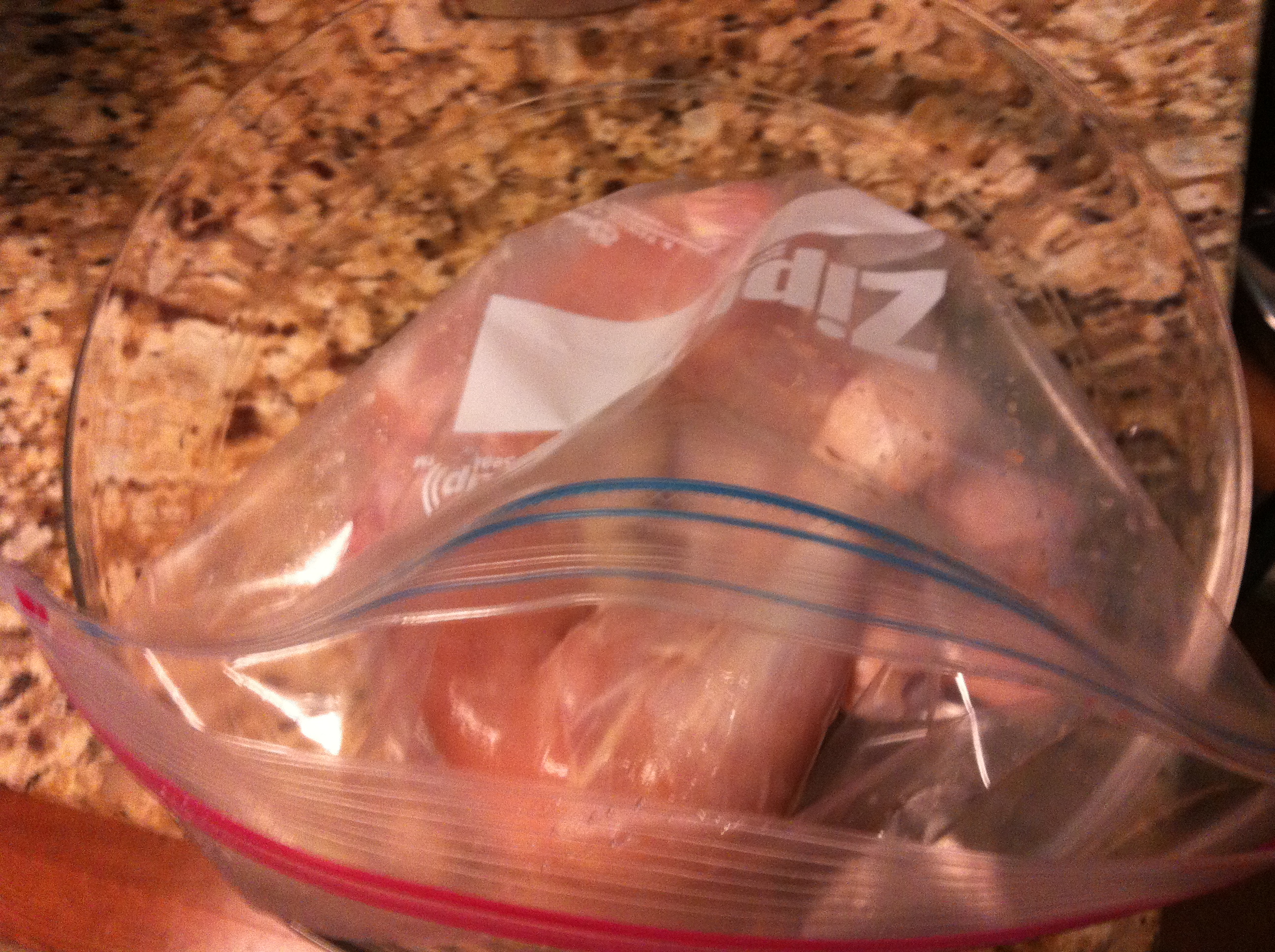
Place chicken in a sealable plastic bag. Add the marinade to thoroughly coat chicken, then place the sealed bag in a bowl or pan to catch any possible leakage. Marinate, refrigerated, for at least four hours or, preferably, overnight. If necessary, turn the bag over once or twice while marinating.

If using chicken breasts that have not been boned, place them on a medium-hot grill first, before adding the other pieces. After about four minutes on each side, add the other chicken pieces. From that point on, grill for six to ten minutes per side, until browned and cooked through—chicken is no longer pink and the juices run clear. Boneless breasts of chicken might take slightly less time than bone-in.

Share this:

  • Share on Facebook (Opens in new window) Facebook
  • Share on X (Opens in new window) X
  • Share on Pinterest (Opens in new window) Pinterest
  • Share on LinkedIn (Opens in new window) LinkedIn
  • Email a link to a friend (Opens in new window) Email
  • Print (Opens in new window) Print
  • Share on Tumblr (Opens in new window) Tumblr
  • Share on Pocket (Opens in new window) Pocket
  • Share on Reddit (Opens in new window) Reddit
Like Loading...

Grandma Monia’s Breaded Eggplant

14 Wednesday Sep 2011

Posted by themidlifesecondwife in Food for Thought

≈ 4 Comments

Tags

Breading, Cooking, Eggplant, Food, Italian cooking, Olive oil, Recipe

[In the years since first posting this recipe, I’ve discovered a far better way to prepare the eggplant for dredging and frying; therefore, I’ve edited this post on June 9, 2025, to revise the first step in the recipe.]

Serves 4, with ample leftovers. Kept in a tightly sealed plastic container or on a plate covered tightly with plastic wrap, these should keep for about a week refrigerated.

One medium-size eggplant
Salt
Four eggs
Seasoned Italian bread crumbs
Parmesan cheese
Good olive oil

A word before you begin: It’s always a good idea to read through a recipe a couple of times before you launch into things. That said, please don’t let the length of this recipe scare you away—it’s an easy dish to prepare! I tried to be as detailed as I could  because for this dish, it’s all about preparation and process. Have all of your ingredients at hand and ready before you start, and give yourself ample time for working on this, because once you begin frying the eggplant you really need to remain at the stove until you’re finished. But trust me: the reward will be delicious!

With a vegetable peeler, remove the skin from the eggplant. Using a sharp knife, trim off the ends. Using the same knife or a mandoline slicer, carefully slice the eggplant into large discs, approximately ¼ -inch thick. 

Line two or three large baking sheets with paper towels, and place each eggplant slice on the toweling, sprinkling with salt. Cover the slices with more paper toweling to blot. (This eliminates the need to soak the slices in salted water, as suggested in an earlier iteration of this post.) 

While the sliced eggplant is resting on the paper toweling, set up your preparation area, or mise en place:

Whisk the eggs in a bowl large enough to hold several eggplant slices.

Using a breading pan, place about two cups of breadcrumbs and one cup Parmesan cheese in one of its sections; mix well with a fork. (If you don’t have a breading pan, use two baking sheets with sides—I use two old pizza pans. Don’t do anything with the other section or the second baking sheet or pizza pan yet; you will use it to hold the breaded slices.

Line yet another baking sheet with paper towels and set aside. (You’ll use this to drain the fried eggplant.)

Place the sliced eggplant, three to four slices at a time, in the egg wash and be certain to thoroughly coat each side.

Then, one at a time, place an egg-washed slice of eggplant in the crumb-and-cheese mixture, pressing firmly enough with the palm of your hand and your fingers to ensure a good, even coat of crumbs on each side. Set the breaded eggplant slice on the extra pan you have set aside. Continue this process until all of the slices have been breaded.

Over medium heat, warm a large sauté pan for about 30 seconds, then add enough good quality olive oil to coat the bottom of the pan. Increase the heat to medium-high. Once the oil is hot, place several eggplant slices in the pan, taking care not to crowd them. Brown for about five minutes or until the bottoms are golden brown, then turn them over and brown the other side. When the first batch is complete, remove from the pan and drain on the large, paper-towel-lined pan you had set aside. Then place a layer of paper towels on top of the fried eggplant slices, ready to receive the next fried batch. (You’ll end up with paper towels between each layer of eggplant.)

Complete this process until all of the eggplant slices have been fried. Note that after about two fryings, you’ll need to carefully drain the hot oil from the pan and replenish it with fresh oil, repeating this process as needed. (An empty coffee can works great for this.) You don’t want the oil to get black and smoky; this will burn the eggplant and ruin the taste. What you are looking for are nice, golden-brown slices.

Serve warm, or prepare ahead and refrigerate. These are delicious cold; I’ve never tried to reheat them. You can eat them plain. (I dare you to have enough left over to serve guests!) Although I’ve never felt the urge to reheat them, John suggests doing so and serving them with a warm marinara dipping sauce.)

Incidentally, this is also a great first-step in making Eggplant Parmesan—something that I’ve never attempted, for some inexplicable reason. As someone who is half-Sicilian and thinks her Italian cooking skills are pretty sharp, I’m embarrassed to admit this to you. Now I’ll have to hunt for a good recipe. If you have a great recipe for Eggplant Parmesan that you’d like to share, please post it in the comment section following this recipe!

Share this:

  • Share on Facebook (Opens in new window) Facebook
  • Share on X (Opens in new window) X
  • Share on Pinterest (Opens in new window) Pinterest
  • Share on LinkedIn (Opens in new window) LinkedIn
  • Email a link to a friend (Opens in new window) Email
  • Print (Opens in new window) Print
  • Share on Tumblr (Opens in new window) Tumblr
  • Share on Pocket (Opens in new window) Pocket
  • Share on Reddit (Opens in new window) Reddit
Like Loading...

The Grill Next Door

07 Wednesday Sep 2011

Posted by themidlifesecondwife in Food for Thought

≈ 3 Comments

Tags

Cooking, Fish, Food, Grilling, Marinades, recipes

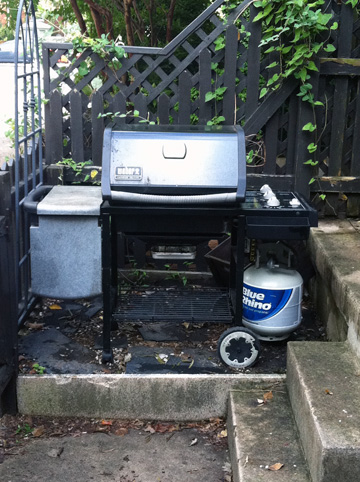
The nifty Weber Genesis

Those who do not own a grill, either charcoal or gas, might relate to this. You are walking out your front door around suppertime, minding your own business, only to be stopped in your tracks, seduced by the aroma of meat-on-the-fire. Invariably, said meat has been doused with some delectable concoction. It is wafting your way from the general vicinity of the neighbor down the street. Hunger and envy ensue.

Read the full story, which includes a recipe for Teriyaki Marinade …

Share this:

  • Share on Facebook (Opens in new window) Facebook
  • Share on X (Opens in new window) X
  • Share on Pinterest (Opens in new window) Pinterest
  • Share on LinkedIn (Opens in new window) LinkedIn
  • Email a link to a friend (Opens in new window) Email
  • Print (Opens in new window) Print
  • Share on Tumblr (Opens in new window) Tumblr
  • Share on Pocket (Opens in new window) Pocket
  • Share on Reddit (Opens in new window) Reddit
Like Loading...
Newer posts →

Twitter Updates

Tweets by midlife2wife

Company

  • 184,397 Guests since 8/24/11

Receive notifications of new posts by email.

Join 1,202 other subscribers

Topics

  • Current Events
  • Food for Thought
  • Giveaways
  • House and Garden
  • Humor Me
  • Indulgences
  • Inspiring Women
  • LifeStyles
  • Love
  • Midpoints
  • Monday Morning Q & A
  • Money Matters
  • Nostalgia
  • Portraits of the Artist
  • Product Reviews
  • Relationships and Family Life
  • Remarriage
  • Second Weddings
  • Second Wife Hall of Fame
  • Secrets to a Happy Relationship
  • Special Events
  • Technology
  • The Beautiful Life
  • The Cultured Life
  • The Healthy Life
  • The Life Poetic
  • The Musical Life
  • The Reading Life
  • The Well-Dressed Life
  • The Writing Life
  • Transitions
  • Travel
  • Well-Dressed
  • What's the Buzz?

RSS Feeds

  • RSS - Posts
  • RSS - Comments

Archives

  • July 2019 (1)
  • December 2014 (1)
  • November 2014 (1)
  • October 2014 (2)
  • August 2014 (1)
  • June 2014 (2)
  • May 2014 (2)
  • April 2014 (3)
  • March 2014 (3)
  • February 2014 (3)
  • January 2014 (4)
  • December 2013 (9)
  • November 2013 (2)
  • October 2013 (3)
  • September 2013 (6)
  • August 2013 (5)
  • July 2013 (6)
  • June 2013 (2)
  • May 2013 (3)
  • April 2013 (1)
  • March 2013 (1)
  • January 2013 (3)
  • December 2012 (7)
  • November 2012 (7)
  • October 2012 (12)
  • September 2012 (9)
  • August 2012 (6)
  • July 2012 (4)
  • June 2012 (5)
  • May 2012 (4)
  • April 2012 (1)
  • March 2012 (10)
  • February 2012 (8)
  • January 2012 (9)
  • December 2011 (10)
  • November 2011 (30)
  • October 2011 (18)
  • September 2011 (12)
  • August 2011 (2)

Networks

NetworkedBlogs
Blog:
The Midlife Second Wife ™
Topics:
Relationships, Life, After 50
 
Follow my blog

bloglovin

The Blogs of Others

  • A Baby Boomer Woman's Life After 50
  • A.B. Westrick
  • An Empowered Spirit
  • Apart from my Art
  • Author Meg Medina
  • Better After 50
  • Books is Wonderful
  • Darryle Pollack: I Never Signed Up For This
  • Diana Patient: Photography
  • Empty House, Full Mind
  • GenerationBSquared
  • Grandma's Briefs
  • Grown and Flown
  • Midlife at the Oasis
  • Midlife Boulevard
  • Midlife Mixtape
  • Reason Creek
  • Relocation: The Blog
  • Romancing Reality
  • Second Lives Club
  • The Boomer Rants
  • WHOA Network
  • WordCount

COPYRIGHT © 2011 — 2024  Marci Rich and The Midlife Second Wife™ Keyword Communications, LLC. All Rights Reserved.

Blog at WordPress.com.

  • Subscribe Subscribed
    • The Midlife Second Wife ™
    • Join 450 other subscribers
    • Already have a WordPress.com account? Log in now.
    • The Midlife Second Wife ™
    • Subscribe Subscribed
    • Sign up
    • Log in
    • Report this content
    • View site in Reader
    • Manage subscriptions
    • Collapse this bar
 

Loading Comments...
 

    %d